


IT in Manufacturing


Operator training simulators – a living library for the restless generation

November 2025 IT in Manufacturing

Industrial operations are, like the rest of the world, faced with a fundamental generational workforce change. Today, most baby boomers, therefore those experienced operators that fall between the ages 61-79, are projected to be retired by 2035. As a younger, more mobile generation steps in, the traditional model of long apprenticeships and gradual knowledge transfer is no longer sustainable.Considering the above, operator training simulators (OTS) have become a very viable option, helping organisations to onboard talent, preserve institutional knowledge, and importantly maintain safety in potentially hazardous environments.
A workforce in flux

Younger employees are entering industrial workplaces with strong digital fluency, but less inclination to spend years shadowing mentors. According to Forbes, Gen Z values autonomy, flexibility and purpose-driven work. They prefer mentorship programmes that are interactive, personalised and digitally accessible, rather than traditional long-term shadowing.

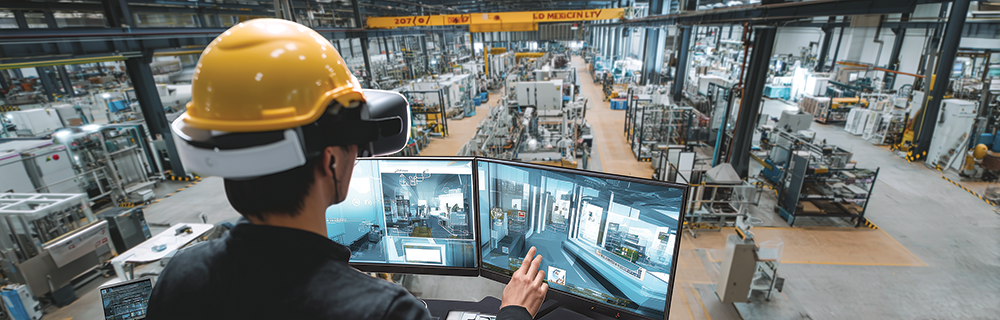
It is therefore critical that years of ‘on-the-job experience’ can be compressed into accelerated training programmes. OTS address this challenge head-on. These platforms replicate the behaviours of live plant systems, providing new operators with realistic, immersive experiences that build confidence and competence before they encounter real assets.


Kobus Vermeulen, direct sales executive, Process Automation at Schneider Electric.

Accelerating training

To further improve training, organisations should also consider system-agnostic OTS, which is flexible and works across diverse control systems. This is particularly beneficial to those organisations that have multiple sites or evolving automation platforms. Instead of investing in different training tools for each system, companies can rely on a single, scalable platform that adapts to varied environments.

This ubiquitousness also shortens onboarding times. Trainees gain experience in realistic environments without prior systems control familiarity, thus accelerating the process of achieving competency. Furthermore, centralised training can be standardised across facilities, ensuring that best practices are shared consistently, regardless of geography or technology.

Safeguarding expertise

As mentioned, one of the most pressing concerns in modern industry is the loss of institutional knowledge as senior operators retire. As Nobel prize laureate, Werner Heisenber noted: “An expert is someone who knows some of the worst mistakes that can be made in his subject, and how to avoid them.”

Experienced operators know how to respond to rare disturbances, recognising subtle process deviations whilst making intuitive decisions in emergencies. OTS platforms allow this expertise to be captured and embedded into training modules, ensuring it remains accessible for future generations.

Also, by involving retiring operators in the development of scenarios, organisations can preserve not just procedures but also insights into unusual or high-stakes events. These scenarios become a living library of wisdom that new recruits can access repeatedly, bridging the generational gap and protecting against the erosion of operational memory.

Establishing a safety-first culture

Beyond technical skills, OTS plays a critical role in cultivating a strong safety mindset. By simulating both routine operations and emergency events, trainees learn to internalise safety protocols in a controlled, consequence-free environment. The ability to make mistakes without jeopardising equipment or personnel reinforces the importance of vigilance, while repeated exposure ensures safety becomes second nature.

Also. team-based simulations add further value by strengthening communication, coordination and shared accountability, all key elements of a resilient safety culture. Whether an operator has one month or twenty years of experience, OTS ensures that all staff align with the same safety standards.

Schneider Electric’s operator training simulators solutions offers modular, updatable training scenarios that evolve alongside plant processes, regulatory shifts and industry innovations.


Credit(s)


Share this article:
Share via emailShare via LinkedInPrint this page

Further reading:

How smart signalling can transform Africa’s manufacturing future
Schneider Electric South Africa Industrial Wireless
Imagine a factory floor where humans and machines communicate in real time with issues flagged instantly, workflows adjusted seamlessly and downtime reduced to near zero. This is the reality unfolding across Africa as manufacturers embrace the next generation of intelligent signalling technologies.

Read more...
Unpacking the technoeconomic case for cleaner power in wastewater plants
Schneider Electric South Africa Electrical Power & Protection
Behind every reliable wastewater plant is an electrical system exposed to the effects of harmonics, voltage distortion and overloaded networks caused by fleets of variable speed drives on pumps and aerators.Together, they steadily drive up maintenance demands and elevate the risk of failure.

Read more...
Advanced DCSs preserve what must not change while enabling
Schneider Electric South Africa PLCs, DCSs & Controllers
Next-generation DCSs, such as Schneider Electric’s Foxboro, are preserving the best of the old while introducing the new in a less disruptive manner.

Read more...
Rethinking power for Africa’s data centres
Schneider Electric South Africa Electrical Power & Protection
Africa’s digital economy is scaling faster than its power systems. If it wants resilient, competitive and sustainable data centres, the starting point must be a grid-to-chip architecture rather than a genset-first mentality.

Read more...
Siemens ecosystem strengthens data and AI integration
Siemens South Africa IT in Manufacturing
Siemens has announced significant expansions to its Industrial Edge ecosystem, accelerating data and AI integration and releasing enhanced cybersecurity functionalities. These enable a seamless integration of IT and OT environments, optimise processes and reduce operational disruptions.

Read more...
Unifying building information into a sea of insight
Schneider Electric South Africa Electrical Power & Protection
Facility managers realise that in order to gain the most from building automation, they can longer deploy and operate technologies in isolation. Modern, integrated building management solutions address this challenge by bringing data from multiple sources and dispersed locations like HVAC, lighting, access control, lifts, generators, field devices, energy and

Read more...
Why digital LV switchboards matter
Schneider Electric South Africa Electrical Power & Protection
Today’s buildings account for up to 40% of global energy consumption and CO2 emissions. However, buildings are also expected to deliver higher availability and stronger safety performance while also being sustainable. Digital swirchboards make a difference in the way buildings are developed, upgraded and managed.

Read more...
Siemens manages shipbuilding process for HD Hyundai
Siemens South Africa IT in Manufacturing
Siemens has been selected by HD Korea Shipbuilding & Offshore Engineering as a preferred partner to establish an integrated platform to manage the entire shipbuilding process as a single data flow to help ensure consistency across all its global shipyard facilities.

Read more...
The new energy landscape for buildings will be enabled by e-mobility
Schneider Electric South Africa Electrical Power & Protection
The adoption of the electric vehicle continues to proliferate, and buildings are becoming a vital part of the e-mobility movement, which requires a whole new approach to energy management.

Read more...
Transforming the process industry through digitalisation
Endress+Hauser South Africa IT in Manufacturing
By connecting field devices, systems and people, digitalisation creates new opportunities to optimise operations, enhance maintenance strategies and support continuous improvement. As a leading instrumentation provider and major source of process data, Endress+Hauser plays a key role in enabling this transformation.

Read more...


While every effort has been made to ensure the accuracy of the information contained herein, the publisher and its agents cannot be held responsible for any errors contained, or any loss incurred as a result. Articles published do not necessarily reflect the views of the publishers. The editor reserves the right to alter or cut copy. Articles submitted are deemed to have been cleared for publication. Advertisements and company contact details are published as provided by the advertiser. Technews Publishing (Pty) Ltd cannot be held responsible for the accuracy or veracity of supplied material.


© Technews Publishing (Pty) Ltd | All Rights Reserved

