



The conversation around infrastructure is no longer just about bricks, steel and concrete. It is about creating systems that embody equality, resilience and innovation. The International Federation of Consulting Engineers (FIDIC) embraces these as the three pillars of its 2025 theme, ‘Smart Infrastructure: Equality, Resilience and Innovation for a Sustainable World’.
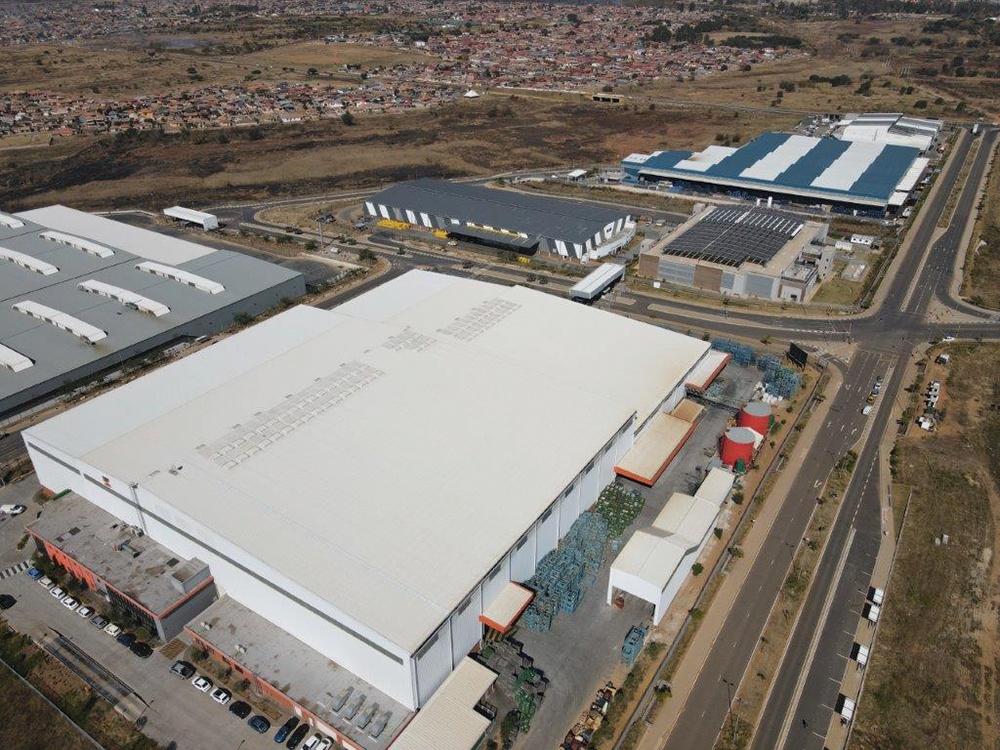
Zutari, with a legacy of over 90 years across Africa and the Middle East, knows that smart infrastructure is not simply about building, it is about shaping living legacies that uplift communities, catalyse economies and prepare nations for the future. A powerful example of this is the Tshwane Automotive Special Economic Zone (TASEZ), one of the largest infrastructure programmes ever undertaken in the City of Tshwane.
Engineering against the odds
Appointed on the eve of South Africa’s March 2020 lockdown, Zutari partnered with the Coega Development Corporation (CDC) to provide civil and structural engineering services for TASEZ. The mammoth task was to deliver all enabling bulk infrastructure and the first phases of the supplier facilities. The timing could not have been more challenging. With the global pandemic disrupting traditional workflows, supply chains and stakeholder engagement, Zutari had to adopt an agile, digitally enabled approach. Virtual collaboration across offices, regions and organisations became the norm. The stakes were high, as Ford had to launch its new Ranger model on time, or risk moving operations elsewhere.
The project demanded speed without compromising quality. Agile engineering practices and smart digital collaboration tools allowed Zutari and its partners to bypass conventional step-by-step project gates and instead deliver solutions iteratively. This ‘digital first’ approach was a watershed moment in how infrastructure could be delivered under pressure.
Equality in action: Local empowerment
Beyond engineering excellence, the project was designed as a catalyst for socio-economic development. Zutari’s work supported the creation of 1131 local jobs, 908 training and development beneficiaries,106 SMMEs delivering 36% of the contract value, and R272 million worth of work packages executed by local businesses.
This was not a token effort. Project conditions required that at least 70% of labour come from neighbouring communities, with deliberate emphasis on employing women, youth and people with disabilities. Contractors also had to prioritise local skills centres before seeking expertise elsewhere. Training went beyond technical skills. Accredited courses included business ethics, project management, Safety, Health and Environment compliance, and financial literacy. This broadened the impact, creating entrepreneurs, not just employees.
Resilience through skills and systems
Infrastructure resilience is not only about materials or design. It is also about ensuring that communities around projects gain the skills to thrive long after construction ends. Through a comprehensive training programme covering trades such as bricklaying, plumbing, carpentry, electrical works and concrete construction, participants gained marketable skills. Non-technical training in business management and contract administration prepared SMMEs for long-term success.
By embedding resilience at both the structural and socio-economic level, TASEZ exemplified how infrastructure can withstand disruption; not only physical shocks, but also economic and social uncertainties.
Innovation in collaboration
The TASEZ project was also a case study in collaborative innovation. Nine separate FIDIC-based contracts had to be executed, with varying degrees of overlap, requiring alignment between Ford, the CDC, government, stakeholders, suppliers and contractors. Zutari’s role extended beyond engineering; the company facilitated digital-first project coordination, agile workflows,
and knowledge-sharing practices that are now informing other infrastructure projects across the continent.
The successful delivery of TASEZ ensured that Ford’s Ranger launch remained in South Africa, securing billions in investment and positioning Tshwane as Africa’s first Automotive City. But the deeper legacy lies in the jobs created, skills transferred and SMMEs uplifted.
Zutari believes that smart infrastructure is not just about solving today’s problems. It is about creating platforms for future growth, equity and resilience. Whether it is a school, a bridge, a stadium or a special economic zone, infrastructure should be both globally eminent and locally relevant.
The TASEZ project proves that when infrastructure is smart, it does not just connect roads and factories; it connects people to opportunity, communities to prosperity, and nations to possibility.
For more information contact Cambridge Mokanyane, Zutari,






© Technews Publishing (Pty) Ltd | All Rights Reserved
 printer friendly version