



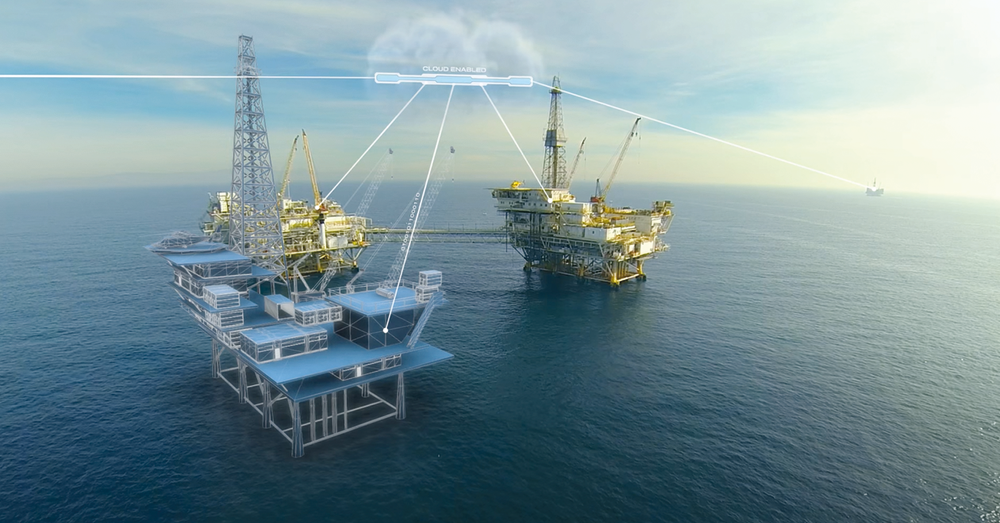
To achieve zero unplanned downtime in the upstream and downstream oil and gas industries, practical efficiencies using digitisation are essential. The most accurate and efficient digitisation method to manage production cycle continuity is a digital twin – an accurate virtual representation of your plant or asset. In addition to improving production efficiency and significantly reducing the likelihood of unplanned maintenance, a digital twin provides numerous other benefits.
These benefits include proper visualisation; sharing and collaboration on projects; faster and better decision-making; asset integrity monitoring and management; and advanced project planning. WorldsView vendors Topcon, Esri, Autodesk and Clearedge provide hardware and software that facilitate the building of a representative digital twin that enables substantial revenue increases. Improved revenue is realised through increased production, reduced project startup times and improved operational efficiencies.
Most interpretations of a digital twin have been limited to 3D visualisation of physical assets. This is an inaccurate description. A digital twin in the true sense is a virtual representation of a potential or physical asset that integrates artificial intelligence, machine learning and software analytics. In so doing, it creates a real-time, dynamic digital model from a physical model. “The model can be developed into a living, functional, intelligent digital model that provides live data on physical assets and their operations,” says WorldsView technical account manager, Edwin Atiegoba. “This allows for the effective remote management of real assets.”
To generate an intelligent, living digital twin model of an oil and gas facility, a location-based monitoring application that enables proper visualisation of the data on maps and live dashboards – with location-based intelligence – is necessary
Creating a digital twin, step-by-step
Capture: Data capturing using a 3D laser scanner facilitates data collection from an asset, which can be used to generate new as-built drawings and 3D models of facilities. It is more accurate and faster than traditional techniques, especially when there are no existing drawings. It has also proven highly cost-effective when collecting data from large areas like offshore and onshore oil and gas platforms and oil refineries. To do this, 3D laser scanners that measure 3D co-ordinates that have the capacity to collect large arrays of data at a given time and generate a point cloud are required.
Process: Raw data must be processed before it can be interpreted. Topcon Magnet Collage is an intuitive, flexible software that processes and analyses point cloud data from any 3D laser scanner. It does this quickly and includes point clouds and panoramic images from the field when processing and analysing raw data.
Model and design: Once the above two steps are complete, designing a 3D model based on the accurate point cloud follows. Topcon and Clearedge 3D teamed up to develop feature extraction software called EdgeWise. It is an inbuilt modelling platform that uses advanced algorithms and pattern matching technologies to automatically extract plant features. The adoption of these technologies speeds up the process of creating an intelligent 3D model of your plant. “By using these 3D digital models, customers have saved over 70% of their project time when compared to using traditional manual modelling software,” says Atiegoba.
Share and collaborate: Esri is a cloud-based software used to create and share interactive web maps and apps, collaborate online and analyse and work with data. A Nextspace software application called Bruce Digital Twin is used to integrate CAD, BIM, GIS, IIoT, Point Clouds/LIDAR, multimedia data and other spatial and non-spatial data for facilities and asset management. Bruce is used to store, search, view, analyse, collaborate and present from an open standards cloud-based web user interface. It allows users to directly import from various industry foundation classes (IFC) data sources. A distinct advantage of this software is that it provides a modern digital version of the Method of Loci, making the visual data navigation available to everyone.
“Yet another benefit of Bruce is that it enables sophisticated data integration, visualisation, analytics and machine learning not just for the oil and gas, but also for architecture, engineering, construction, agriculture and other industries,” says Atiegoba. “The software interfaces to plant and process design systems to create a living, breathing complete model of oil and gas assets. With the aid of this digital twin workflow, a living, intelligent and location-based digital twin model of an oil and gas facility can easily be developed.”






© Technews Publishing (Pty) Ltd | All Rights Reserved
 printer friendly version