Machine learning and artificial intelligence applications in artificial lift systems have seen a growth in importance recently and are no longer a nice to have, but essential tools for design, optimisation and failure prediction. Real-time optimisation techniques that help to optimise the production, however, do not necessarily holistically consider the equipment reliability and best operating range.
Whenever a failure occurs, the reasons could be attributed to more than one condition and hence, Root Cause Analysis is often a complicated process involving visual inspection and laboratory analysis to confirm the reason for the failure. The best operating envelopes for the lift system are also at the discretion of the optimisation engineer, who may not visit often enough to account for changing operating conditions. This may lead to the system operating in a conservative fashion leading to reduced production. As an example, a rod pump might operate at a lower speed anticipating high rod stresses based on historical operation. In some instances, the systems might not be designed for the desired operating environment and may pose a threat to its reliability. There is a need for a technology which would serve as a guide to overcome these challenges using real-time diagnosis and provide foresight into future operations and potential problems that may increase operator costs.
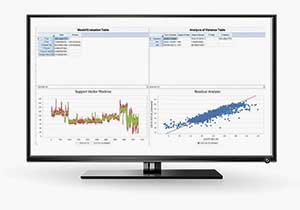
Emerson’s predictive analysis for artificial lift using the Knowledge Net (KNet) Machine Learning Platform is an engineered solution for predicting failures or abnormal working conditions before their onset. The solution utilises historical data from the wells to build a solid offline well model, which then gets trained on the real-time data as the well comes on to production. As the lift systems are subject to many complex events that might lead to a potential failure, the principal component analysis helps in the elimination process. With a comprehensive Failure Mode Effect Analysis and Root Cause Analysis library, the solution captures, in real-time, the abnormality and translates it into a potential run time deviation. With a prior indication, the condition can be corrected or interventions planned more efficiently. The dynamic modelling of key performance indicators based on system intelligence help in driving asset performance to identify the priorities relevant to the existing conditions. This widens the scope from mere well performance to complete asset performance enhancement.
Even in autonomous systems, human insight is important Schneider Electric South Africa
IT in Manufacturing
As AI, IIoT and digital twins reshape industrial operations, Schneider Electric’s Kobus Vermeulen and Bafana Msibi argue that the operator’s role is shifting from controlling equipment to interpreting intelligence, validating AI recommendations and making decisions that improve
Read more...AI-based quality inspection scales across P&G operations Siemens South Africa
IT in Manufacturing
Siemens and Procter & Gamble are expanding an AI-based visual inspection system across P&G’s manufacturing operations worldwide, inspecting products in real time at full line speed, and reducing scrap rates by 10 to 20% depending on the product.
Read more...How sustainability unlocks real business impact Rockwell Automation
IT in Manufacturing
Sustainability has moved from a compliance obligation to a strategic driver of resilience and value for manufacturers. Rockwell Automation explains how its Triple A framework and connected-data approach help producers cut energy, water and waste while improving productivity.
Read more...Mining’s AI future will depend on people as well as technology
IT in Manufacturing
South Africa’s mining industry is embracing digitalisation and AI, but AvenirHoldings chief executive officer, Tshidi Mndzebele says the real test is whether the people behind the industry are equipped to move forward with it, and outlines five things mining needs to get right.
Read more...How BIC overcame operational silos to integrate technology and people Rockwell Automation
IT in Manufacturing
Manufacturing giant BIC deployed Plex MES from Rockwell Automation at its Bizerte plant in Tunisia, replacing fragmented, partly in-house software with a single cloud-based execution system that broke operational silos and improved shop-floor visibility.
Read more...AI in industry is an early warning system, not a guarantee Schneider Electric South Africa
IT in Manufacturing
Schneider Electric’s Paul Steyn argues that AI in industrial maintenance is only as good as the infrastructure and people behind it, and explains the three layers a facility needs before predictive maintenance can deliver on its promise.
Read more...SA’s mining industry must put people at the heart of its digital future
IT in Manufacturing
South Africa’s mining industry employs around 470 000 people while its digital transition accelerates. Avenir’s chief executive officer, Tshidi Mndzebele argues that technology should enable and upskill the workforce rather than replace it, setting out five ways mining can make technology work for its people.
Read more...Quality control supports efficient tissue production Valmet South Africa
IT in Manufacturing
Valmet’s advanced quality control technology is helping tissue producers improve product consistency while reducing energy and raw material consumption. Its latest installation at KORO Paper in Vietnam combines real-time measurement, process optimisation and non-contact, nuclear-free quality control.
Read more...Patented algorithm maximises operator efficiency Rockwell Automation
IT in Manufacturing
Rockwell Automation piloted a patented anomaly detection algorithm and FactoryTalk DataMosaix at its Twinsburg electronics plant, giving operators 30 to 60 days’ advance warning of stencil failure, improving fail rates by 22% and achieving a 200% return on investment.
Read more...Cybersecurity must become part of the next era of industrial automation Adroit Technologies
IT in Manufacturing
The EU’s Cyber Resilience Act is setting a global benchmark for connected products, making cybersecurity a core engineering requirement in industrial automation. Adroit Technologies and Mitsubishi Electric explain how building security into controllers, PLCs and drives from the outset helps South African manufacturers protect production and meet international expectations.
While every effort has been made to ensure the accuracy of the information contained herein, the publisher and its agents cannot be held responsible for any errors contained, or any loss incurred as a result. Articles published do not necessarily reflect the views of the publishers. The editor reserves the right to alter or cut copy. Articles submitted are deemed to have been cleared for publication. Advertisements and company contact details are published as provided by the advertiser. Technews Publishing (Pty) Ltd cannot be held responsible for the accuracy or veracity of supplied material.










 printer friendly version