PLC makes simultaneous use of four CPUs
June 2002
PLCs, DCSs & Controllers
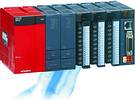
The simultaneous use of up to four CPUs - a completely new feature - gives Mitsubishi Electric's Q significantly improved control, monitoring and diagnostics functionality, compared to its predecessor. The new technology gives Q the power to handle the growing demands of modern automation systems while dealing with the need for integrated communications technologies like Internet access, FTP servers, e-mail and SMS. On the control level, the new multiprocessor technology makes it possible to assign discrete tasks to as many as four CPUs for systems with significantly higher execution speeds and availability.
The ability to integrate CPU types with different performance and features in a single system enables precise configuration of the controller for the needs of the individual application. In addition to its other benefits, this makes the new Q a cost-effective multiprocessor solution.
The CPUs have efficient self-diagnostics functions that identify system errors and can also store chronological error histories for later troubleshooting and analysis. This provides additional reliability and effective production with less down time. The integrated RS232 (115,2 Kbaud) and USB (12 Mbaud) ports provide faster performance for transferring and editing PLC programs and speed up the controller's monitoring and diagnostics functions.
Compact dimensions
35% smaller than its predecessor, 12 modules and the module rack together measure 98 x 439 x 98 mm. This results in savings of valuable space in the switchgear cabinet. A complete system can include up to seven expansion module racks, up to 8,192 I/Os and up to 64 modules.
Motion controller integration
The new Q can achieve full integration of control and drive system applications. The PLC and motion controller may be installed on a single module rack and control up to 128 axes simultaneously.
Integrated IT technology
Mitsubishi Electric has also designed the new Q to function as a service station in the manufacturing process. The web server feature makes a series of powerful new functions possible, including remote maintenance and diagnostics and automatic error messages via e-mail and SMS. The FTP server function provides direct access to the Q controller, enabling the efficient remote exchange of program data. For example, a technician could change the recipe for an application from a distant location or another system level, instead of having to do it directly in the same works.
Online change
Cycle times and the reduction of down time are becoming more and more crucial in today's age of just-in-time production. The new Q caters to these needs with its advanced Online Change function, which allows users to exchange parts of the control program while the system is in operation, thus reducing the time required for retooling and system set-up.
Further reading:
Network-capable remote relay system with flexible channel assignment
Phoenix Contact
PLCs, DCSs & Controllers
Phoenix Contact has launched a modular PLC-Interface Ethernet Gateway remote relay system with up to 56 configurable I/O channels, multi-protocol support including Profinet Class C and S2 redundancy, and compatibility with established controller software for straightforward network integration.
Read more...
Seven checks before replacing an obsolete industrial control component
PLCs, DCSs & Controllers
An obsolete control component rarely fails in isolation. Before ordering an exact spare, manufacturer successor or engineered alternative, maintenance and procurement teams should work through seven checks to define the problem properly and avoid a costly mismatch.
Read more...
Loop signature Part 2-6
PLCs, DCSs & Controllers
This instalment of the Loop Signature series introduces frequency plot theory as a foundation for understanding process dynamics, explaining Bode plots, dynamic gain, phase lag and their relationship to control loop tuning.
Read more...
The rise of software-defined brownfield automation
Schneider Electric South Africa
PLCs, DCSs & Controllers
Schneider Electric’s EcoStruxure Automation Expert is enabling brownfield operators to modernise incrementally, decoupling control logic from hardware to bridge legacy equipment and future-ready operations without disrupting production.
Read more...
Upgrading alarm systems for critical industries
Omniflex Remote Monitoring Specialists
PLCs, DCSs & Controllers
Omniflex’s OMNI16R alarm annunciator platform provides a direct replacement for legacy CSA systems such as MPAS 90 and SA9100, enabling operators in oil and gas, nuclear and power generation to modernise alarm infrastructure without sacrificing the clarity required for safe operations.
Read more...
How DCS can step off the hardware obsolescence treadmill
Schneider Electric South Africa
PLCs, DCSs & Controllers
Schneider Electric argues that virtualising DCS environments breaks the cycle of hardware obsolescence, giving plant operators a smarter path to lifecycle modernisation without production disruption.
Read more...
Loop signature Part 2-6
PLCs, DCSs & Controllers
The Loop Signature series turns to frequency plot theory, explaining Bode open-loop plots and how dynamic gain, phase lag and crossover frequency can be extracted from test data to inform more accurate control loop tuning.
Read more...
PC-based control in surgery
Beckhoff Automation
Editor's Choice PLCs, DCSs & Controllers
Researchers at the University of Basel are using Beckhoff PC-based control technology to develop a miniature laser robot for minimally invasive bone surgery.
Read more...
IIoT controller for the field and control cabinet
ifm - South Africa
PLCs, DCSs & Controllers
The IIoT controller from ifm is a powerful, communicative and flexible PLC solution in machine and plant digitalisation.
Read more...
How the DCS can step off the hardware obsolescence treadmill
Schneider Electric South Africa
PLCs, DCSs & Controllers
Ageing servers and unsupported operating systems are quietly eroding the stability of process plants that rely on distributed control systems. Kobus Vermeulen of Schneider Electric explains how virtualising the DCS environment can break the hardware obsolescence cycle without disrupting operations.
Read more...










 printer friendly version