Tokyo Keiki’s non-intrusive, clamp-on type flowmeters minimise pressure loss and the effects of deterioration of ageing pipes to ensure that high measurement accuracy and stability is maintained over time. The advantages of these flowmeters include simple and easy installation, especially on existing pipes, compared to intrusive ‘wet’ type meters.
However, the retention of optimum performance after extended years of use is a great challenge for clamp-on type flowmeters. To overcome this, the transducers (sensors) are mounted using banded stainless steel wires and special adhesive wells attached to the pipe. This ensures that good signal quality and stability are sustained, even over prolonged periods of time.
For instance, an ultrasonic flowmeter of the UF-700 series has been in operation at a Japanese hydroelectric power plant for more than 25 years. Despite the build-up of calcified scale over time, this flowmeter has continued to function reliably – a testament to the product’s robust design.
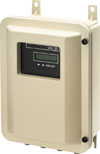
The latest stationary flowmeter, the UFL-30, is the successor to the legacy UF-700 series. These high-performance products are based on extensive application experience to ensure that they meet the demanding requirements of the global market. The UFL-30 can be connected with up to four pairs of transducers (4-path) for a stable measurement even under turbulent conditions and in short pipe lengths. The flowmeter is suitable for pipe diameters from DN25 to DN6000 with a -30 to +30 m/s measurement range and 1 mm/sec resolution velocity. Among the advanced features is the variety of outputs offered: two analogue outputs and four relay or two digital outputs (RS232C or Modbus) as standard. These attributes provide the flexibility and convenience that enable the UFL-30 to cover a wide range of applications.
Hygienic and accurate flow measurement ifm - South Africa
Flow Measurement & Control
ifm’s ultrasonic sensor detects flows of conductive and non-conductive media with high precision.
Read more...Hygienic ultrasonic flow sensor ifm - South Africa
Flow Measurement & Control
The SU Puresonic Hygienic ultrasonic sensor from ifm detects flows of conductive and non-conductive media with high precision.
Read more...VEGA pressure instrumentation supports resilient water network management VEGA Controls SA
Pressure Measurement & Control Flow Measurement & Control
As rapid urbanisation and climate pressures strain water networks across Africa, accurate real-time pressure monitoring has become a strategic necessity. VEGA’s pressure instrumentation helps utilities reduce losses, protect infrastructure and meet sustainability targets.
Read more...Flow imaging microscopy for the early detection of harmful algal blooms Yokogawa South Africa
Flow Measurement & Control
Yokogawa’s advanced flow imaging microscopy technology, FlowCam is helping utilities move from reactive treatment to proactive prevention of harmful algal blooms in reservoirs, dams and freshwater sources.
Read more...Never waste a drop
Flow Measurement & Control
Manufacturers of pumps, valves and related equipment have an important role to play when systems for water are being designed or upgraded and should be included at every stage of a project to ensure that the work is carried out within the equipment’s capabilities.
Read more...Ultrasonic flow meters ifm - South Africa
Flow Measurement & Control
The ultrasonic flow meter of the SU series from ifm - South Africa monitors liquid media such as water, glycol solutions or industrial oils. It detects the three process categories volumetric flow quantity, consumed quantity and medium temperature.
Read more...How utilities identify water losses in Northern Europe
Flow Measurement & Control
Norwegian leak detection specialist, Ovarro outlines how municipalities are responding to hidden water loss using acoustic monitoring and analysis tools that provide early indications of developing leaks.
Read more...Senix sensors provide flood warnings Instrotech
Flow Measurement & Control
To create the world’s most sophisticated flood monitoring and forecasting system, the US State of Iowa’s Flood Centre (IFC) uses more than 200 Senix ToughSonic 30 and ToughSonic 50 ultrasonic sensors to measure water levels in streams across the state.
Read more...Mastering inline LNG flow monitoring
Flow Measurement & Control
[Sponsored] As global demand for cleaner, more flexible energy sources continues to rise, liquefied natural gas (LNG) stands at the forefront of the energy transition. Engineered for excellence in cryogenic environments, the Anton Paar L-Cor 8000 flowmeter redefines inline LNG flow monitoring.
While every effort has been made to ensure the accuracy of the information contained herein, the publisher and its agents cannot be held responsible for any errors contained, or any loss incurred as a result. Articles published do not necessarily reflect the views of the publishers. The editor reserves the right to alter or cut copy. Articles submitted are deemed to have been cleared for publication. Advertisements and company contact details are published as provided by the advertiser. Technews Publishing (Pty) Ltd cannot be held responsible for the accuracy or veracity of supplied material.










 printer friendly version