Sweet production
April 2008
PLCs, DCSs & Controllers
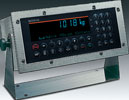
German based VIVIL is a family business into its fourth generation. The company has 222 employees worldwide, responsible for the sale of the company's range of chewable sweets. Automatic process sequences, increased production requirements and a rise in market demand today call for the installation of high-quality products, such as the BATCH-X5 controller from Sartorius.
Batching equipment
For high-quality and fast production of large quantities, automated process sequences not only save time, but also meet today's requirements imposed by the food industry.
In view of this, batching equipment - including the BATCH-X5 controller from Sartorius - has been integrated at the company's production facilities. The factory was developed in cooperation with Sartorius Hamburg's system partner for the sweets industry, Uwe Wilhelm Engineering, responsible for the electrical design, while Fluid-Kotthoff, supplied the mechanical expertise.
The plant serves to batch ingredients, such as water, sugar and glucose, as well as binding agents like starch and gelatine. After batching, the mass is heated with steam to produce a saturated sugar solution. By installing a disperser, powdery materials, such as starch, can be mixed into the solution. This process produces the hard and soft sugar used for coating the chewable sweets.
In the preliminary manufacturing process, the chewable sweet mass is produced in a continuous cooking plant and subsequently shaped into candy drops by means of a forming machine. A conveyor system then transports the drops to a sugar-coating plant, in which they are coated with a hard or soft sugar solution. In the next manufacturing process, the sweets are taken by a conveyor system to fill the hoppers.
Quality, reliability and performance
Frank Brüger, VIVIL's electrical engineering manager, commented, "Since we were due to change our company's old batch weighing systems in the medium term, we investigated a number of replacement solutions. After assessing our needs, it became apparent that the BATCH-X5 controller from Sartorius would meet all our requirements. The most important factor was the option to exchange the weighing system while retaining the rest of the control technology.
"Since we use Sartorius equipment in the laboratory we have confidence in the performance and quality of the company and its products. Due to our experiences in recent years, it is extremely important to us to work with a reliable partner and to guarantee our investment for the future."
For more information contact Patrick Radermacher, taratec, +27 (0)11 660 6277, [email protected], www.taratec.co.za
Further reading:
How the DCS can step off the hardware obsolescence treadmill
Schneider Electric South Africa
PLCs, DCSs & Controllers
Ageing servers and unsupported operating systems are quietly eroding the stability of process plants that rely on distributed control systems. Kobus Vermeulen of Schneider Electric explains how virtualising the DCS environment can break the hardware obsolescence cycle without disrupting operations.
Read more...
Centralised control rooms where growth is elastic, not physical
Schneider Electric South Africa
PLCs, DCSs & Controllers
Modernised control rooms feature distributed control system architecture consolidated into centralised compute environments. replacing traditional PCs with thin clients.
Read more...
Advanced DCSs preserve what must not change while enabling
Schneider Electric South Africa
PLCs, DCSs & Controllers
Next-generation DCSs, such as Schneider Electric’s Foxboro, are preserving the best of the old while introducing the new in a less disruptive manner.
Read more...
Siemens launches new generation of logic controller
Siemens South Africa
PLCs, DCSs & Controllers
Siemens has launched the latest generation of its proven intelligent logic controller, LOGO! 9. This enables simple implementation of small automation projects.
Read more...
DCS for maximum plant efficiency and reliability
ABB South Africa
PLCs, DCSs & Controllers
ABB has introduced SPR2025, the latest Symphony Plus DCS package release to enable modernisation and efficient performance for the process and power industries.
Read more...
Future-proof automation
Vepac Electronics
PLCs, DCSs & Controllers
The highly adaptable SALZ control system consists of open hardware, modular engineering software based on a virtualisation concept and an integrated app store.
Read more...
Robust PLC for field applications
ifm - South Africa
PLCs, DCSs & Controllers
ifm is a leading suppliers of robust control systems for mobile use. Its ecomat series comprises PLCs, I/O modules and sensors that can withstand the harsh environmental influences of mobile applications.
Read more...
ABB’s new flagship DCS
ABB South Africa
PLCs, DCSs & Controllers
ABB has launched the latest version of its flagship distributed control system, to help industrial operators modernise without disruption and accelerate their path toward next generation automation.
Read more...
Adroit Technologies drives global SCADA for Iochpe-Maxion
Adroit Technologies
PLCs, DCSs & Controllers
Adroit Technologies has been appointed by Iochpe-Maxion, parent company of one of the world’s largest wheel manufacturers and producers of structural components in the Americas, as its global SCADA partner. The partnership will standardise operational visibility, reliability and control across 34 manufacturing facilities worldwide.
Read more...
Extended DCS enables industrial innovation with continuity
ABB South Africa
PLCs, DCSs & Controllers
ABB has introduced its Automation Extended programme, a strategic evolution of its distributed control systems (DCS), designed to help industries modernise without disruption.
Read more...










 printer friendly version