



The principles of manufacturing distribution boards have changed very little over the past few decades. Advances in bus-bar supports and other sub-components have taken place, and different players have been around providing these sub-components, or they were self-manufactured. However, it was basically left to each individual panel manufacturer to fully understand the detailed requirements of such complex issues as temperature rise and short-circuit withstand of the bus-bar system.
To further complicate matters, the physical properties and the way that switchgear for each manufacturer reacted during fault conditions were never quite the same. This left panel manufacturers to spend large amounts of their time calculating and checking figures towards the final electrical distribution board.
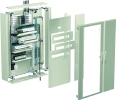
The introduction of Schneider Electric's Prisma Plus modular distribution board system solves most of the problems and most of the manual effort of creating a distribution board, replacing it with integrated know-how, has changed the future of panel building.
How does this affect the panel manufacturers that have invested large sums of money in metal cutting and working machinery, not to mention SABS approvals?
Opportunity really is the honest answer! There will always be room for specialist boards, such as those for motor control centres, which provide profitable returns. At the same time, this creates a rebalance in the knowledge and skill requirements. Specialist panel builders can refocus their skills, rationalise expensive labour-intensive costs and cut their capital investment requirements - at the same time affording better service to their existing customer base.
Labour intensive aspects, which can be somewhat unreliable at times, such as welding and painting, are required only for the specialist applications. Modular systems such as Prisma Plus, guarantee a consistently high-quality product, with most of the calculations taken out of designing a distribution board, ensuring that the final solution is also absolutely dependable. Emphasis now centres on the detailed specialist electrical know-how required to manufacture an electrical distribution solution.
Speed of manufacturing is increased dramatically. A few days' work in design, cutting, assembly and welding, powder coating and other tasks are replaced by a modular system that can be assembled in a matter of hours since every part is pre-manufactured. When a design change takes place at the last possible moment this does not present a problem, because a modular system allows for changes that take a minimal amount of time to implement.
With total manufacturing turnaround time radically decreased, higher output with the same or a smaller number resource base is realised. A panel manufacturer, which typically would quote four to six weeks for delivery, can now quote delivery in a matter of days. This means a significant competitive advantage in the market against the old way of working.
Continued investment in research and development in the product is no longer required by the individual panel manufacturer, since this is taken care of by Schneider Electric's specialist resources. These resources continue to develop features, at the same time ensuring compliance to international and local regulatory requirements.
Prisma Plus is fully compliant to IEC 60439-1 (and therefore SANS 60439-1) as well as the SANS 1473-1 front-end specification.
There are also many benefits for the end-users. The Prisma Plus system caters, for example, for establishing such high levels of safety that the internal parts are safe to the touch when the enclosure is open and energised. In addition, the nature of the modular design allows for very fast upgrades and expansion of an existing installation. Various distribution options are available also to ensure that downtime is minimised in the case of a severe failure.
This new concept in panel building has received very strong approval from panel builders and end-users, since its launch here in April 2005, as evident from the enormous growth. The system will continue to grow as more and more people realise the benefits of deploying a technologically advanced system that, together with other Schneider products, form a solution that is truly ahead of its time.
The Prisma Plus electrical distribution board system is rated up to 3200 A with a short circuit withstand of 85 kA. Together with Schneider's Merlin Gerin and Telemecanique equipment, it forms a top quality Type Tested solution.
It is a case of out with the old and in with the new way of doing things. This change in manufacturing of electrical distribution boards is yet another indication of industry progress and understanding of market demands. The question is, who will ignore the benefits, and who will adopt the latest technology and remain competitive in their markets?
| Tel: | +27 11 254 6400 |
| Email: | [email protected] |
| www: | www.se.com/za/en/ |
| Articles: | More information and articles about Schneider Electric South Africa |






© Technews Publishing (Pty) Ltd | All Rights Reserved
 printer friendly version