December 2000Analytical Instrumentation & Environmental Monitoring
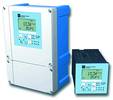
In applications where chlorine and chlorine dioxide are used to disinfect water in water supply systems, industrial processes and swimming pools, accurate measurement is of utmost importance if the correct balance between the sterility of the water and its safety is to be maintained. It is for this reason that Endress+Hauser Liquisys S analysis transmitter, (known for its flexibility and ease-of-use in the measurement of pH, conductivity, dissolved oxygen, turbidity and residual chlorine) has been extended to include the Liquisys S Chlorine version. The development of this new measuring transmitter specifically for measuring free chlorine and chlorine dioxide was completed last year, and internal beta-tests have been running in a public indoor pool (chlorine) and a water work (chlorine dioxide) for several weeks.
All three versions of this new measuring transmitter - the basic EK version, which can be used for measurement of chlorine and chlorine dioxide, the plus package ES version with added features - and the full expansion EP version, which offers a combined measurement with pH or ORP in one instrument - are modular in design. This means they are highly adaptable to a wide range of customer needs. The basic version, which provides simple measuring and alarm signalling functions, can be equipped with additional software and hardware modules to meet specific applications. Expansion modules can be retrofitted as required.
The chlorine unit has a number of new features, which contribute toward a significant increase in technical performance at a reduced price. It is compatible with all sensors - CCS 140/141 for free chlorine and CCS240/241 for chlorine dioxide - as well as with the new open sensor 963 in the EK version. The EP version offers additional pH value or redox potential in an instrument. This expansion stage also allows control of the pH value process. pH compensation for free chlorine is available to both the automatic and manual mode.
As these sensors are zero-current-free, they require only a single-point calibration. Unnecessary claims can be suppressed thanks to the unit's ability for independent configuration of the alarm contact and the error current.
The 4 to 20mA current input for mainstream flow monitoring has an automatic dosing stop facilitated by a free selectable limit value. The PID controller outputs are also influenced by the mainstream flow to facilitate short response control loops in the water industry. The bypass flow monitoring via inductive proximity switch INS with automatic dosing stop is also available. Each check function is selectable with or without additional dosing stop. The PID controller for chlorine/chlorine dioxide now includes a controller for pH, as well as a three-point step controller for chlorine/chlorine dioxide.
Matching HVAC to the real demands of buildings and processes
Analytical Instrumentation & Environmental Monitoring
Industrial Climate Engineering director, Alin Gomes explains why effective HVAC goes beyond specifying equipment on capacity, covering load profiling, ventilation requirements, heat recovery and turnkey delivery for specialised manufacturing and processing environments.
Read more...How SCE approaches sensor selection for critical environments Specialised Climate Engineering
Analytical Instrumentation & Environmental Monitoring
Specifying the right sensor for a critical climate involves far more than matching a datasheet accuracy figure. As an authorised Vaisala HVAC partner, SCE explains how understanding the environment, the measurement purpose and sensor placement determines effective climate control.
Read more...Changing gas quality calls for smarter combustion control
Analytical Instrumentation & Environmental Monitoring
As South Africa prepares for a transition from declining Mozambican natural gas to a proposed methane-rich bridge, LNG, industrial users can no longer assume a constant Wobbe Index and calorific value. The compact RMG RGQ 5 provides fast, plant-level gas-quality data to support approved burner and engine settings.
Read more...Getting the chemistry right
Analytical Instrumentation & Environmental Monitoring
Grace’s European production site has relied on analogue compression load cells from Minebea Intec for decades, with the long-proven measurement concept now serving as the reference for new silo projects as the company expands its capacity.
Read more...Why measurement matters in smelting Endress+Hauser South Africa
Analytical Instrumentation & Environmental Monitoring
South African smelters returning to operation after energy constraints face new demands for tighter control, better visibility and environmental compliance. Endress+Hauser explains how modern measurement technology supports safer, more efficient furnace operation and local beneficiation.
Read more...Sun tracking with pinpoint precision Senseca
Analytical Instrumentation & Environmental Monitoring
Senseca has introduced the SEMS-2000 solar energy measurement system, a 2-axis solar tracker with pinpoint sun-pointing accuracy that automatically monitors direct, global and diffuse irradiance for unattended outdoor solar installations.
Read more...AMETEK expands 993X gas analyser series with explosion-proof enclosures
Analytical Instrumentation & Environmental Monitoring
AMETEK Process Instruments has added ATEX and IECEx Zone 1-certified explosion-proof enclosures to its 993X series of gas analysers, enabling reliable installation in Zone 1 hazardous locations where purge gas is unavailable.
Read more...Why medical device leak testing matters for South Africa's MedTech future ATEQ South Africa
Analytical Instrumentation & Environmental Monitoring
As South Africa works to grow local medical technology manufacturing, non-destructive leak and flow testing is becoming a strategic quality assurance tool, helping manufacturers verify device integrity, meet regulatory requirements and improve production efficiency.
Read more...Moving forward with reverse osmosis
Analytical Instrumentation & Environmental Monitoring
Rising water costs and pressure on infrastructure are changing the way industries view reverse osmosis. G-Chem Aquacare is developing tailored, containerised solutions that make the technology more accessible for South African industry.
While every effort has been made to ensure the accuracy of the information contained herein, the publisher and its agents cannot be held responsible for any errors contained, or any loss incurred as a result. Articles published do not necessarily reflect the views of the publishers. The editor reserves the right to alter or cut copy. Articles submitted are deemed to have been cleared for publication. Advertisements and company contact details are published as provided by the advertiser. Technews Publishing (Pty) Ltd cannot be held responsible for the accuracy or veracity of supplied material.










 printer friendly version