Endress+Hauser believes a new era has begun with the successful completion of a three-month trial period in a local mining application that proved the viability of radar technology in solids level measurement.
To date, solids radar measurement devices have been launched with no great success, often failing to satisfy basic client requirements such as consistent accuracy and reliability. Having already captured a firm place in non-invasive level measurement in liquids of all kinds after the introduction of 2-wire technology, radar has now been perfected for use in solids measurement. This is largely due to the development of auxiliary components, which achieved an enormous increase in radar sensor sensitivity with low power input.
"We placed great importance on making radar work and work well in solids measurement," says Endress+Hauser marketing manager, Grant Joyce. "The reliability, accuracy and cost-effective nature of radar technology gave us the confidence that, once we had a working solution, it would be welcomed into the market."
Once the instrumentation specialist was ready to take its Micropilot M FMR250 solids radar to market, an ideal opportunity presented itself in the form of Middleburg Ferro Chrome inviting several manufacturers to provide it with a working solids measurement solution in a difficult application.
Right from the start, the client was impressed with the FMR250. "I never realised that the set-up and calibration would be so quick and easy," said a spokesperson from the mine. "The previous suppliers took the entire day and still the set-up was not complete." Having met and exceeded the client's expectations, Endress+Hauser's solids radar especially impressed in terms of its price/performance ratio.
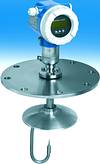
Micropilot M FMR250 is available in two compact designs: with horn or parabolic antenna. It is intended mainly for use in level measurement in high silos with powdery or lumpy bulk solids, eg, cement, raw meal, fly ash, clinker or animal feed. Dust, filling noise, pressure and temperature layers do not impair the reliability of measured values. In addition, this non-invasive measuring principle is highly suited to measurement in abrasive bulk solids, eg, iron oxide.
The maximum measuring range of Micropilot M FMR250 is 70 m and it can handle applications up to +200°C. Its two-wire technology provides simple and cost-effective wiring. The integrated air purge connection ensures reliable functioning, even in extremely dusty applications - and this without any labour-intensive and expensive retrofitting. The alignment unit provides optimum adjustment to angled surfaces and prevents interfering reflections. Commissioning and operation is handled via the plain language display directly on site or the ToF-Tool/FieldCare operating software from the control room - as simply and fast as is the case with all time-of-flight instruments from Endress+Hauser.
Why measurement matters in smelting Endress+Hauser South Africa
Analytical Instrumentation & Environmental Monitoring
South African smelters returning to operation after energy constraints face new demands for tighter control, better visibility and environmental compliance. Endress+Hauser explains how modern measurement technology supports safer, more efficient furnace operation and local beneficiation.
Read more...‘Control Talk SA’ podcast with Emerson on level measurement for the mining industry Emerson Automation Solutions
Level Measurement & Control
Reliable level measurement is critical to keeping South African mines safe, productive and sustainable, but harsh conditions can make accurate readings challenging. In this Emerson podcast, Shivam Misra explores how advanced radar technology and remote monitoring are helping mines improve measurement reliability while reducing operator exposure to hazardous areas.
Read more...VEGA leads Africa’s next mining era VEGA Controls SA
Level Measurement & Control
Africa’s mines demand instrumentation that performs under extreme conditions, and VEGA’s level, pressure, point-level and density solutions are engineered to deliver exactly that. From flotation circuits to tailings management, its technologies help operations convert reliable process data into measurable gains in productivity, safety and control.
Read more...Inductive ring sensors monitor material flow in feeding technology ifm - South Africa
Level Measurement & Control
Inductive ring sensors detect metallic parts moving through tubes at up to 35 m/s, whatever their size, enabling precise counting, flow control and reliable detection of blockages or misfeeds.
Read more...Inspiration for times of change Endress+Hauser South Africa
News
More than 2000 customers, partners and experts gathered in Basel, Switzerland, for the Endress+Hauser Global Forum in April 2026. Under the theme of driving sustainable transformation together, the event combined keynote sessions on strategy, technology and the future of work with practical case studies from across the process industry.
Read more...Optimise sludge treatment and reduce operational costs Endress+Hauser South Africa
Sensors & Transducers
Endress+Hauser’s inline measuring devices, the Proline Teqwave MW 300 and the Proline Teqwave MW 500, determine the total solids content of wastewater directly through microwave transmission.
Read more...Groundwater level measurement using LoRa module Instrotech
Level Measurement & Control
Monitoring groundwater levels across large industrial sites is critical. Salzgitter Digital Solution was tasked with developing a fully automated and digital monitoring system using Long Range Wide Area Network technology.
Read more...Where corrosion meets control VEGA Controls SA
Level Measurement & Control
Reliable level measurement is essential in copper and cobalt processing, and at KCC, VEGA Controls is helping ensure uninterrupted operations with robust vibrating level switch technology.
Read more...Safety, hygiene and quality management for Africa’s pharmaceutical manufacturing industry VEGA Controls SA
Level Measurement & Control
VEGA sensors support critical processes in pharmaceutical manufacturing such as fermentation, purification, formulation, filling, storage and CIP/SIP cleaning cycles. Their design ensures that pharmaceutical manufacturers can maintain sterility, reduce downtime and achieve consistent batch quality, even in demanding production environments.
While every effort has been made to ensure the accuracy of the information contained herein, the publisher and its agents cannot be held responsible for any errors contained, or any loss incurred as a result. Articles published do not necessarily reflect the views of the publishers. The editor reserves the right to alter or cut copy. Articles submitted are deemed to have been cleared for publication. Advertisements and company contact details are published as provided by the advertiser. Technews Publishing (Pty) Ltd cannot be held responsible for the accuracy or veracity of supplied material.










 printer friendly version