


PLCs, DCSs & Controllers


High controller availability in essential applications

August 2004 PLCs, DCSs & Controllers

The new PACSystems high availability solutions provide a scaleable synchronised hot-standby redundant control platform, with transparent process switchover and easy configuration to ensure uptime in essential applications. They are designed to meet the demands of applications requiring seamless operation and zero downtime - where mere moments of interruption can significantly delay operational flow, create excessive operational costs, or pose a threat to product quality.
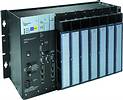
The PACSystems RX7i offers four times the speed of existing PLC backplanes

This is according to Daniel Coetzee, business manager Sub-Saharan Africa for GE Fanuc Automation. "Developed with GE Fanuc's patented, innovative technology, PACSystems High Availability assures not only maximum uptime but also transparent process switchover," Coetzee maintains. "This fast switchover has measured up to five times faster than other systems with large data transfers in time critical applications, helping users to realise up to 20% more production capacity.

PACSystems High Availability solutions provide synchronised redundancy for any module in a control chain capable of bringing operations to a halt. Should any part of a controller fail, its backup counterpart automatically assumes control."

Its high availability makes the system suitable for a variety of applications in the areas of:

* Offshore, ships, buoys, windmills, pipeline, oil-well auxiliary control, remote pumping stations, field access control and sub-sea applications - where repair costs are very high due to the application's remote access.

* Crane controls, transport systems, fence control, bridge controls, airway lighting, turbine auxiliary, HVAC or water treatment systems - where downtime causes delay in the operational flow.

* Metals mills, cement mixing, oven control or semiconductor manufacturing - where downtime causes increased material waste and/or damaged equipment.

"GE Fanuc combines the most advanced technologies to offer an industry-leading seamless redundant control switchover. There is virtually no overhead added to the control application, making switchover fast and transparent," says Coetzee. The control process and HMI/scada applications never see a 'bump' during a process switchover operation. This functionality maximises data capture, minimises system restarts and protects equipment, assuring maximum process productivity. Configuration is made easier through GE Fanuc's universal programming environment (Proficy Logic Developer) and its redundancy wizard.

Users can set up shared data and I/O for both systems in the redundant configuration in a matter of minutes. Application scalability and modifications are made easy, and the programmer modifies only the application code. The redundancy and data synchronisation are automatically ensured. With multiple and scaleable ways to provide redundancy, a simple implementation can save up to 50% in control hardware cost versus traditional installations.

A typical solution consists of two physically independent controllers connected to a variety of I/O, utilising a proven industrial network that provides deterministic data and automatic switchover.

The controllers incorporate dedicated and redundant links to one another and operate synchronously, transferring all of the application's variables, status, and I/O data with each data sweep. The redundant link uses GE Fanuc's new PACSystems Control Memory Xchange for the fastest synchronisation, with little or no impact on the application program. PACSystems High Availability has been available from the second quarter 2004.

For more information contact Daniel Coetzee, business manager, Sub-Saharan Africa, GE Fanuc Automation, 031 583 2602, daniel.coetzee@gefanuc.com, www.gefanuc.com


Share this article:
Share via emailShare via LinkedInPrint this page

Further reading:

Loop signature Part 2-6
PLCs, DCSs & Controllers
This instalment of the Loop Signature series introduces frequency plot theory as a foundation for understanding process dynamics, explaining Bode plots, dynamic gain, phase lag and their relationship to control loop tuning.

Read more...
The rise of software-defined brownfield automation
Schneider Electric South Africa PLCs, DCSs & Controllers
Schneider Electric’s EcoStruxure Automation Expert is enabling brownfield operators to modernise incrementally, decoupling control logic from hardware to bridge legacy equipment and future-ready operations without disrupting production.

Read more...
Upgrading alarm systems for critical industries
Omniflex Remote Monitoring Specialists PLCs, DCSs & Controllers
Omniflex’s OMNI16R alarm annunciator platform provides a direct replacement for legacy CSA systems such as MPAS 90 and SA9100, enabling operators in oil and gas, nuclear and power generation to modernise alarm infrastructure without sacrificing the clarity required for safe operations.

Read more...
How DCS can step off the hardware obsolescence treadmill
Schneider Electric South Africa PLCs, DCSs & Controllers
Schneider Electric argues that virtualising DCS environments breaks the cycle of hardware obsolescence, giving plant operators a smarter path to lifecycle modernisation without production disruption.

Read more...
Loop signature Part 2-6
PLCs, DCSs & Controllers
The Loop Signature series turns to frequency plot theory, explaining Bode open-loop plots and how dynamic gain, phase lag and crossover frequency can be extracted from test data to inform more accurate control loop tuning.

Read more...
PC-based control in surgery
Beckhoff Automation Editor's Choice PLCs, DCSs & Controllers
Researchers at the University of Basel are using Beckhoff PC-based control technology to develop a miniature laser robot for minimally invasive bone surgery.

Read more...
IIoT controller for the field and control cabinet
ifm - South Africa PLCs, DCSs & Controllers
The IIoT controller from ifm is a powerful, communicative and flexible PLC solution in machine and plant digitalisation.

Read more...
How the DCS can step off the hardware obsolescence treadmill
Schneider Electric South Africa PLCs, DCSs & Controllers
Ageing servers and unsupported operating systems are quietly eroding the stability of process plants that rely on distributed control systems. Kobus Vermeulen of Schneider Electric explains how virtualising the DCS environment can break the hardware obsolescence cycle without disrupting operations.

Read more...
Centralised control rooms where growth is elastic, not physical
Schneider Electric South Africa PLCs, DCSs & Controllers
Modernised control rooms feature distributed control system architecture consolidated into centralised compute environments. replacing traditional PCs with thin clients.

Read more...
Advanced DCSs preserve what must not change while enabling
Schneider Electric South Africa PLCs, DCSs & Controllers
Next-generation DCSs, such as Schneider Electric’s Foxboro, are preserving the best of the old while introducing the new in a less disruptive manner.

Read more...


While every effort has been made to ensure the accuracy of the information contained herein, the publisher and its agents cannot be held responsible for any errors contained, or any loss incurred as a result. Articles published do not necessarily reflect the views of the publishers. The editor reserves the right to alter or cut copy. Articles submitted are deemed to have been cleared for publication. Advertisements and company contact details are published as provided by the advertiser. Technews Publishing (Pty) Ltd cannot be held responsible for the accuracy or veracity of supplied material.


© Technews Publishing (Pty) Ltd | All Rights Reserved

