Intelligent process controllers prevent failure and downtime
May 2004
PLCs, DCSs & Controllers
Frustrating failures that cause unscheduled downtime are often a result of:
* Moisture ingress when processes cool down.
* Processes overheating, stopping - or tons of scrap produced due to sensor failure.
* Elements burning out.
* Stress due to thermal expansion in the start-up phase.
These are often largely due to sensor failure, sensors not being mounted properly, a break in the circuit, condensation or moisture ingress when elements are turned off or controllers that do not have advanced functions (eg, switching between two predetermined temperatures).
Modern, advanced temperature controllers can solve these problems. These intelligent controllers look for faults in the process. If a fault is detected, the controller will work around it in order to reduce downtime.
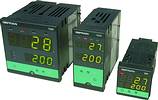
UniTemp is offering Gefran's new 600, 1200 and 1300 series of single loop PID temperature controllers - which include features that are latest developments in this area. With this series the user can switch between two setpoints by either operating a button on the instrument faceplate, or by operating a remote switch. It is possible to switch the system to standby mode, dropping the temperature down to a warm level above dewpoint. Leaving elements at a reduced temperature above dewpoint during off-periods eliminates failure due to moisture ingress and reduces start-up time. A typical example would be on hotrunner systems for injection moulding, where the degrading of plastic (eg, Acetal) can be avoided during stoppage without having to switch elements off completely.
Another benefit is soft start, which causes the output power to increase linearly when the controller is powered up. Soft start allows moisture to escape from the elements before full heating power is applied. This prevents damage to elements due to moisture ingress and reduces the stress due to thermal expansion in the start-up phase. These controllers also come with a loop break alarm and a sensor failure alarm. As they switch the elements on, they detect if there is a resulting rise in temperature. If there is a fault (a break in the circuit, sensors not being mounted properly, sensor failure, etc), they activate an alarm. The user can configure the controllers to default to a predetermined output power if the sensor fails or manually tune the output power to the desired level. This allows completion of a run even if the sensor fails and therefore avoids downtime.
Cheaper controllers do not come with these advanced features. Using intelligent controllers will allow processes to run more efficiently and also save on downtime.
For more information contact Neil Coetzer, UniTemp, 011 392 5989.
Further reading:
Upgrading alarm systems for critical industries
Omniflex Remote Monitoring Specialists
PLCs, DCSs & Controllers
Omniflex’s OMNI16R alarm annunciator platform provides a direct replacement for legacy CSA systems such as MPAS 90 and SA9100, enabling operators in oil and gas, nuclear and power generation to modernise alarm infrastructure without sacrificing the clarity required for safe operations.
Read more...
How DCS can step off the hardware obsolescence treadmill
Schneider Electric South Africa
PLCs, DCSs & Controllers
Schneider Electric argues that virtualising DCS environments breaks the cycle of hardware obsolescence, giving plant operators a smarter path to lifecycle modernisation without production disruption.
Read more...
Loop signature Part 2-6
PLCs, DCSs & Controllers
The Loop Signature series turns to frequency plot theory, explaining Bode open-loop plots and how dynamic gain, phase lag and crossover frequency can be extracted from test data to inform more accurate control loop tuning.
Read more...
PC-based control in surgery
Beckhoff Automation
Editor's Choice PLCs, DCSs & Controllers
Researchers at the University of Basel are using Beckhoff PC-based control technology to develop a miniature laser robot for minimally invasive bone surgery.
Read more...
IIoT controller for the field and control cabinet
ifm - South Africa
PLCs, DCSs & Controllers
The IIoT controller from ifm is a powerful, communicative and flexible PLC solution in machine and plant digitalisation.
Read more...
How the DCS can step off the hardware obsolescence treadmill
Schneider Electric South Africa
PLCs, DCSs & Controllers
Ageing servers and unsupported operating systems are quietly eroding the stability of process plants that rely on distributed control systems. Kobus Vermeulen of Schneider Electric explains how virtualising the DCS environment can break the hardware obsolescence cycle without disrupting operations.
Read more...
Centralised control rooms where growth is elastic, not physical
Schneider Electric South Africa
PLCs, DCSs & Controllers
Modernised control rooms feature distributed control system architecture consolidated into centralised compute environments. replacing traditional PCs with thin clients.
Read more...
Advanced DCSs preserve what must not change while enabling
Schneider Electric South Africa
PLCs, DCSs & Controllers
Next-generation DCSs, such as Schneider Electric’s Foxboro, are preserving the best of the old while introducing the new in a less disruptive manner.
Read more...
Siemens launches new generation of logic controller
Siemens South Africa
PLCs, DCSs & Controllers
Siemens has launched the latest generation of its proven intelligent logic controller, LOGO! 9. This enables simple implementation of small automation projects.
Read more...
DCS for maximum plant efficiency and reliability
ABB South Africa
PLCs, DCSs & Controllers
ABB has introduced SPR2025, the latest Symphony Plus DCS package release to enable modernisation and efficient performance for the process and power industries.
Read more...










 printer friendly version