Rationalising PLC multi-axis control
January 2004
PLCs, DCSs & Controllers
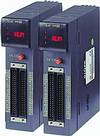
Traditionally, CNC machines have been controlled by dedicated, multi-axis control modules. These dedicated modules were expensive and specifically designed for their particular function. The machine peripheral controls were handled by a PLC, which then had to be interfaced to the multi-axis controller. This often led to the situation where the system, comprising various makes of equipment, made local support difficult for the owner of the machine.
In single axis machines, such as bag-makers or thermo-forming machines so-called intelligent drives were used, requiring highly-specialised programming and making it almost impossible to change the type of servo-drive without a complete re-engineering of the machine control system.
To address this situation, LG developed economically priced precision positioning modules which occupy a normal I/O slot on a rack-type PLC, offering the obvious advantages of compatibility and harmony between peripheral and axis control, with local support, combined with ease of programming. These modules offer 32 bit accuracy, 2-axis arc interpolations, 3-axis linear operation, synchronous /separate/simultaneous operation and can be cascaded to accommodate dozens of axes.
The positioning modules (1, 2 or 3-axis) operate in realtime, outside of the normal PLC cycle time, merely reporting the successful completion of the positioning task/s. A further advantage, is that the machine parameters can be entered via a standard HMI, allowing the client to set machining requirements, log totals or details of completed jobs, etc, and to either print information or to communicate directly with a PC.
This represents a significant step forward over the standard numerical control (NC) or computer numerical control (CNC) concepts, with information, machine control and diagnostics now all incorporated into a harmonious single rack PLC system. The LG positioning modules interface to most makes of servo drive, making this system viable for all CNC machine upgrades (of all accuracy classes).
For more information contact Peter Gross, LG Industrial Systems SA, 021 914 9030, [email protected]
Further reading:
Network-capable remote relay system with flexible channel assignment
Phoenix Contact
PLCs, DCSs & Controllers
Phoenix Contact has launched a modular PLC-Interface Ethernet Gateway remote relay system with up to 56 configurable I/O channels, multi-protocol support including Profinet Class C and S2 redundancy, and compatibility with established controller software for straightforward network integration.
Read more...
Seven checks before replacing an obsolete industrial control component
PLCs, DCSs & Controllers
An obsolete control component rarely fails in isolation. Before ordering an exact spare, manufacturer successor or engineered alternative, maintenance and procurement teams should work through seven checks to define the problem properly and avoid a costly mismatch.
Read more...
Loop signature Part 2-6
PLCs, DCSs & Controllers
This instalment of the Loop Signature series introduces frequency plot theory as a foundation for understanding process dynamics, explaining Bode plots, dynamic gain, phase lag and their relationship to control loop tuning.
Read more...
The rise of software-defined brownfield automation
Schneider Electric South Africa
PLCs, DCSs & Controllers
Schneider Electric’s EcoStruxure Automation Expert is enabling brownfield operators to modernise incrementally, decoupling control logic from hardware to bridge legacy equipment and future-ready operations without disrupting production.
Read more...
Upgrading alarm systems for critical industries
Omniflex Remote Monitoring Specialists
PLCs, DCSs & Controllers
Omniflex’s OMNI16R alarm annunciator platform provides a direct replacement for legacy CSA systems such as MPAS 90 and SA9100, enabling operators in oil and gas, nuclear and power generation to modernise alarm infrastructure without sacrificing the clarity required for safe operations.
Read more...
How DCS can step off the hardware obsolescence treadmill
Schneider Electric South Africa
PLCs, DCSs & Controllers
Schneider Electric argues that virtualising DCS environments breaks the cycle of hardware obsolescence, giving plant operators a smarter path to lifecycle modernisation without production disruption.
Read more...
Loop signature Part 2-6
PLCs, DCSs & Controllers
The Loop Signature series turns to frequency plot theory, explaining Bode open-loop plots and how dynamic gain, phase lag and crossover frequency can be extracted from test data to inform more accurate control loop tuning.
Read more...
PC-based control in surgery
Beckhoff Automation
Editor's Choice PLCs, DCSs & Controllers
Researchers at the University of Basel are using Beckhoff PC-based control technology to develop a miniature laser robot for minimally invasive bone surgery.
Read more...
IIoT controller for the field and control cabinet
ifm - South Africa
PLCs, DCSs & Controllers
The IIoT controller from ifm is a powerful, communicative and flexible PLC solution in machine and plant digitalisation.
Read more...
How the DCS can step off the hardware obsolescence treadmill
Schneider Electric South Africa
PLCs, DCSs & Controllers
Ageing servers and unsupported operating systems are quietly eroding the stability of process plants that rely on distributed control systems. Kobus Vermeulen of Schneider Electric explains how virtualising the DCS environment can break the hardware obsolescence cycle without disrupting operations.
Read more...










 printer friendly version