



In most water and wastewater treatment plants, measurement instrumentation plays a vital role in controlling the processes. Significant progress has been made in automating wastewater management by instrumentation specialist Endress+Hauser.
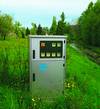
Most parameters are monitored in realtime at the measuring point, such as pH and turbidity. Other parameters such as phosphate, nitrate and ammonium iron concentrations, have historically been sampled and analysed in a laboratory. This process has limitations - there are time delays, temperature changes and even chemical activity variations between the process sample and a sample obtained in a controlled laboratory environment.
It is accepted that any laboratory analysis is only as good as the sample. In the new range of Endress+Hauser analysers called the Stamolys, the analyser is taken to the sampling point, with one model each for nitrate, phosphate and ammonium iron concentration evaluation. The company describes the Stamolys range as aimed at automatic, unattended analysis of key wastewater components at the process, 'thereby eliminating the limitation of laboratory sampling.'
Calorimetric measuring methodology is employed for all three measurements as it is traceable to DIN 38405/6 standards. This means that a treated sample is allowed to react with reagents, which causes a specific colour change proportional to the concentration of the specific measurement.
This method of analysis requires preconditioning of the sample; to remove mainly suspended solids that can foul the photoelectric cell or clog the fine reagent tubes. The Stamolys range can be used with a conditioning system already in place or with the Endress+Hauser sedimentation unit (CA50). This unit uses an airlift system to draw the sample into a settling chamber. After the predetermined settling time, the clear liquid supernatant is fed to the analyser through a sinter filter. In the event of an extended settling time, a dual channel CA50 can overcome the long waiting period by drawing and settling consecutive samples. The maximum expansion possible allows three analysers, in other words one for each ion, using a dual channel CA50, permitting three different parameters to be measured from two sampling points.
Another Endress+Hauser product that breaks new ground in wastewater treatment is the submersible CUS70 and CUM 750 ultrasound measuring system. It is often very important in wastewater management to know the location of the separation layer between the water layer, and the sludge layer, as it indicates the efficiency of the primary clarifier process.
The fixed-frequency sonar signal generated by piezoelectric crystals in Endress+Hauser's new ultrasonic equipment is allowed to propagate through the medium. The propagation speed is affected by minute density changes. As the probe is lowered into the medium, it generates a graphical display or density profile of the different density zones present. Amongst other features, the 32 bit processor offers the possibility of defining a region or 'gate' above and below the separation zone. Signal evaluation then only takes place in this defined area, as the gate drifts with the separation zone, making smoothing algorithms unnecessary.
Proving its ability to deliver complete solutions, Endress+Hauser has for years shown its competence in inline fluid analysis process measurements such as pH, conductivity, turbidity, dissolved oxygen, and residual chlorine. Its rugged field transmitters are capable of delivering excellent service under the harshest of conditions. After extensive research and development, the Liquisys S family was recently launched as a cost-effective, user-friendly instrument designed for easy all-round applications or difficult precision applications in the harshest conditions.
The most recent member of the family, the Liquisys S Chlorine transmitter, has arrived, thus completing the group. As a fully modular basic unit, it can be expanded with relays, controllers and timers for simple rinse processes or complete cleaning cycles. Since chlorine measurement is pH dependent, an option is available for integrated pH measurement. This is used by the transmitter for continuous pH correction. A second 4 to 20 mA output is available for either temperature or pH measurement. Both outputs are freely configurable to suit the individual user.
Endress+Hauser offers a solution for every need of the wastewater industry.
| Tel: | +27 11 262 8000 |
| Email: | info.za.sc@endress.com |
| www: | www.endress.com |
| Articles: | More information and articles about Endress+Hauser South Africa |






© Technews Publishing (Pty) Ltd | All Rights Reserved
 printer friendly version