



New technology that helps the latest generation Airbus jetliners to fly safely on intercontinental routes is being introduced to protect miners and other workers in southern Africa while also easing the problems posed by the national engineering skills shortage.
Now the pumps and fans essential for moving air and liquids in mines, power stations, manufacturing facilities and a host of other environments can be monitored automatically over the Internet. This enables the world's most experienced engineers, including the designers of the new generation fans and pumps, to be involved directly in both routine installation and maintenance, as well as deal with any emergency situations that arise at even the most remote installations in southern Africa.

"Many countries, particularly the developing nations, face a crisis over the shortage of trained and experienced electrical engineers," says Schneider Electric South Africa's marketing manager, Derain Pillay. "That is why we at Schneider have made it a priority to apply to local South African needs the new technologies such as the Telemecanique pump and fan systems developed for the giant Airbus which are only now starting to go into service with leading airlines.
"The use of new materials and electronic computerised control systems makes even the most sophisticated heating, ventilation, airconditioning and other pumping and air movement equipment much easier to install and maintain. We make effective use of the ingenuity and intelligence of our product development engineers to ease the load on stretched local engineering resources so that the intellectual capital and engineering skills that go into developing the new Telemecanique Altivar 61 pumps and fans are always available.
"The engineering know-how is integrated into the equipment, particularly the control systems with their 150 integrated functions. This evolutionary design ensures simplified installation and setting-up and far more effective operation with less room for human error. As a result, the new generation pumps and fans are far more reliable than older technology, many problems are identified and dealt with promptly by the programmable logic controllers, and the skills of Schneider Electric engineers in Africa and back at our research and manufacturing facilities in France are available 24/7 - only an Internet link away."
The design philosophy of integrating engineering skills into products and services is typified by the 'Simply Start' menu concept which enables the Telemecanique equipment to be installed easily with a reduced requirement for skilled engineering expertise. Numerous electronic smartcards are available and easily programmed to extend the capabilities of the pumps and fans in much the same way as a home computer user can install plug-and-play devices to increase the functionality of a desktop computer.
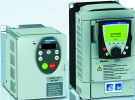
The Altivar 61 range of pumps and fans variable speed drives now being introduced to South Africa has been developed directly from units and technologies Schneider Electric pioneered in aerospace projects such as the Airbus. One of the leading global suppliers of electrical engineering products and services, the French company has now developed the variable speed drives for fans and pumps and their control systems specifically for African aviation and ground conditions. The ground installations in southern Africa will use 3-phase asynchronous motors from 0,75 to 630 kW operating on standard high voltage AC currents to drive heating, ventilation, airconditioning and other similar mission-critical installations under the most demanding conditions to be found in local mines, processing plants, power generation and other facilities.
To follow later this year will be the Altivar 21 range of pumps and fans specifically designed for installation in buildings, including hospitals, factories, office blocks, etc.
Altivar products have had energy saving as a fundamental design requirement, so that over their long operating lives they ensure substantial economies in ongoing costs by consuming less electrical power for any given task, coupled with a reduced load on human resources in terms of their reduced maintenance and monitoring requirements.
In processes and building utilities, 72% of electricity consumed is used to turn motors and 63% of this energy is used in fluids applications. A conventional motor on the network (with the exception of slip ring motors) turns at network frequency using the speed function of the pole pairs. Variation of the flow is obtained directly by varying the motor speed and the flow reduction causes considerable drop in absorbed power.
For example, a fan equipped with a drive that deploys flow regulation means that at 80% of the nominal flow, the power consumption is 50% of nominal power. The Telemecanique Altivar variable speed drives enable energy savings of between 20 and 50% on pump and fan applications, enabling 'just necessary' electric consumption.
Schneider Electric's technologies and products already play a strategically crucial role in many sectors of South African life, including electrical power generation and distribution. The company, which has been operating in sub-Saharan Africa for over 30 years, has recently been involved in a major upgrade to one of the world's largest coal-fired installations.
The new Altivar 61 offers similar prospects of improving multipump water distribution to help tackle the increasing water supply needs of the developing southern Africa region.
This latest Telemecanique technology has a critical role to play also in ventilation and air treatment, including meeting the increasingly stringent safety requirements of the mines and to provide efficient airconditioning and smoke and air pollution extraction in oil and other raw material processing plants and heavy industry facilities. The Altivar 21 products will play a similar role in manufacturing and in commercial and other buildings when they arrive in South Africa later this year.
For more information contact Derain Pillay/Rebecca Haynes, Schneider Electric SA, 011 254 6400.
| Tel: | +27 11 254 6400 |
| Email: | [email protected] |
| www: | www.se.com/za/en/ |
| Articles: | More information and articles about Schneider Electric South Africa |






© Technews Publishing (Pty) Ltd | All Rights Reserved
 printer friendly version