



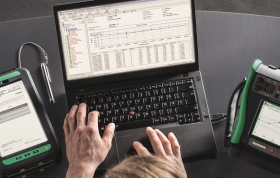
Instrument calibration is just one of the many maintenance-related activities in a process plant, but the last thing anyone needs is to have precious resources wasting time performing unnecessary calibrations or using time-consuming, ineffective calibration procedures.
This article examines at what an ‘Integrated Calibration Solution’ is, and how it can help make calibration process more effective, save time and money and improve the quality and integrity of the results.
Improve the whole calibration process with an Integrated Calibration Solution (ICS)
It is not enough just to buy some new calibration equipment or calibration software – that does not make calibration processes leaner and more effective. Instead, all the steps of the current calibration process should be analysed, and, with the help of a suitable solution and expertise, find ways to improve the whole calibration process.
Let’s take a look at a typical calibration process from beginning to end and explore how an integrated system could help:
ICS-summary
Typically, work is planned, and work orders are created in the maintenance management system. With an integrated solution, these move automatically and digitally from the maintenance management system to the calibration software. There is no need to print work orders and distribute them manually.
The necessary calibration details are handled by the dedicated calibration software, which sends the work orders to the mobile calibration equipment. Again, this happens digitally.
While the technicians are out in the field performing calibration activities, the results are automatically stored in the mobile devices, and users sign off the results using an electronic signature. From the mobile device, the results are automatically transferred back to the calibration software to save and analyse.
Once the work orders are completed, the calibration software automatically sends an acknowledgement to the maintenance management software and work orders are closed.
So, the whole process is paperless and there is no need for manual entry of data at any point. This makes it far more effective and saves time. It also helps minimise mistakes typically associated with manual data entry, so it improves the quality and integrity of the calibration data. Furthermore, calibration results are safely stored and easily accessible for review, for example in the case of audits, or for analysis purposes.
As mentioned, improving the calibration process is not just about buying some new equipment or software, but the project should also include improvement of the whole calibration process together with the new tools supporting it. Implementing a new process is a project with a formal implementation plan, ensuring that the new system/process is adopted by the users.
The key benefits of an integrated calibration solution
• Improve operation efficiency – do more with less.
• Automate calibrations and calibration documentation – eliminate all manual entry steps in the calibration process. Use multifunctional tools to carry less equipment in the field and lower equipment life-cycle costs.
• Save time and reduce costs – generate a great ROI.
• With automated processes, get more done in a shorter time – don’t waste time on unnecessary calibrations, let the data from the system guide you to determine the most important calibrations at appropriate intervals.
• With electronic documentation, avoid all errors in manual entry, transcriptions and Pass/Fail calculations.
• Guides non-experienced users.
• Avoid system failures and out-of-tolerance risks.
Using a calibration system that automatically ensures you meet required tolerance limits not only avoids unnecessary system downtime and expensive out-of-tolerance situations, but also ensures the safety of plant workers and customers by helping maintenance staff navigate through safety critical calibrations. A calibration system that ensures the integrity of the data with automatic electronic data storage and transfer and relevant user authorisation also makes audits and data access easy, thus simplifying compliance issues.
| Tel: | +27 11 391 4598 |
| Email: | [email protected] |
| www: | www.qtekics.co.za |
| Articles: | More information and articles about QTEK Instrumentation & Calibration Solutions |






© Technews Publishing (Pty) Ltd | All Rights Reserved
 printer friendly version