



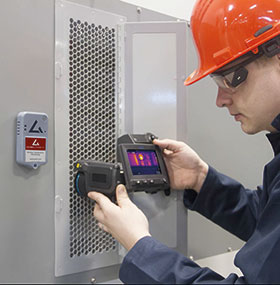
Many industries currently use condition based maintenance (CBM) equipment such as infrared thermography to inspect their electrical systems. Thermography is a proven technology for detecting elevated temperatures within energised electrical distribution systems. Typically performed on an annual basis, infrared inspections can detect evidence of overheating caused by loose/deteriorated connections, overloaded circuits and imbalanced loads.
While these inspections can be valuable to help prevent unexpected failures, like all CBM technologies they only provide a single ‘snapshot in time’ leaving the subject systems unmonitored for the balance of the year.
Electrical accidents happen daily, however, there are important steps that companies can take to reduce the occurrence of these and protect everybody concerned from the physical, financial and statutory consequences related to this type of accident.
Safety methodology
An essential element for electrical safety before work commences is to ensure that the equipment is in an electrically safe condition. Advances in wireless technology have resulted in sensors that, when permanently installed on electrical enclosures can provide year-round monitoring of critical electrical system components and immediately alert personnel when problems arise. These systems enhance the safety and effectiveness of any electrical maintenance programme and offer energy savings by allowing for the timely repair of loose connections that create increased resistance, thus resulting in higher energy costs.
Another issue is that engineers conducting infrared inspections are sometimes unsure of what temperatures actually constitute an alarm. To help engineers, NETA (International Electrical Testing Association) has a table that gives recommended actions depending on the temperature difference (delta) between like for like components within a panel or the delta between the measured component temperature and ambient temperature.
Of course, when thermographers and electricians open electrical panels to perform infrared inspections they increase the risk of allowing an arc flash trigger or electrocution to occur. NFPA and CSA rate the removal of bolted panels on energised electrical equipment to be in the highest hazard/risk category.
Eliminate the risk
Before conducting any maintenance task, all risks to the maintenance engineers or operators must be removed. This is why many companies are increasingly adopting the use of several types of electrical safety maintenance devices (EMSDs) to include thermal imaging equipment, infrared (IR) windows; ultrasound guns, ultrasound ports and online monitoring systems. The online monitoring systems can be configured
to collect data at specific time intervals on a daily basis. The data is wirelessly transmitted for analysis and trending and warns the operator of temperature rise within your electrical enclosures – well before more serious problems arise.
On-line monitoring of critical assets bridges the gaps between annual CBM inspections by daily monitoring and reporting of critical parameters such as the temperatures within electrical enclosures. If a critical issue arises, immediate notification allows for an appropriate corrective action, before costly damage occurs. The system alarms allow for maintenance technicians to be warned of potential issues causing the elevated internal ambient temperatures. This information and trend data gives maintenance personnel an enormous safety advantage prior to any type of routine maintenance or troubleshooting of possible electrical anomalies within the electrical enclosures.
Closed loop inspections
A complete closed loop inspection system allows for safe inspection of electrical systems whilst maintaining an ‘enclosed and guarded condition’ and removing the chances of exposure to the risks of arc flash or electrocution. In this type of system design, an operator will receive an alarm as well as a location from the monitoring system when the temperature differences are above a predetermined level or significantly different from other electrical enclosures within the system. The operators can then go to the identified enclosure and inspect the internal energised and loaded components inside of the electrical enclosure through an infrared window in complete safety. The infrared scan will allow the operator to ascertain the exact temperature and condition of the fault causing the temperature rise and if required conduct the repair once the system is made safe.
The implementation of on-line monitoring and closed loop EMSD solutions for electrical distribution systems give engineers a solid foundation to build a safe and effective electrical preventative maintenance programme. Complying with local safety standards and practices allows companies to maintain safe working environments and maintenance programmes to reduce the chances of injury in their workplace and as such improve their electrical safety records.
For more information contact R&C Instrumentation, 086 111 4217, [email protected], www.randci.co.za
| Tel: | +27 11 608 1551 |
| Email: | [email protected] |
| www: | www.randci.co.za |
| Articles: | More information and articles about R&C Instrumentation |






© Technews Publishing (Pty) Ltd | All Rights Reserved
 printer friendly version