



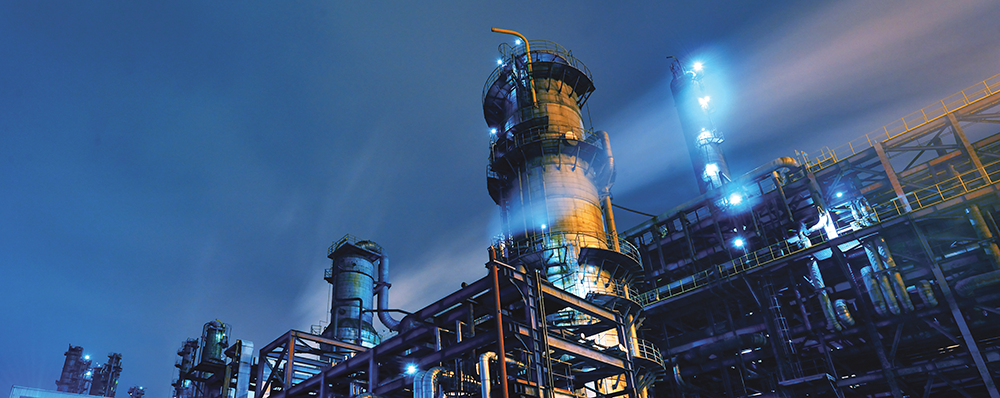
From high-pressure hydraulic circuits in presses and machine tools to low-pressure, high-cycle cooling systems in injection moulding machines, fluid connectors form the network that keeps production safe, clean and continuously operational. As production cycles accelerate and throughput rises, these systems face higher nominal and peak pressures along with greater flow demands, pushing them to their limits.
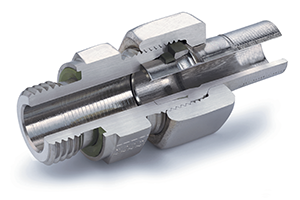
A single connector failure can trigger safety risks and costly downtime that far outweigh the price of the component itself, so connection systems must guarantee safe, continuous and efficient operation even under the harshest loads.
Distinct industry demands
Both metal forming and injection moulding rely on secure, predictable fluid transmission, but their requirements differ significantly. Hydraulic systems in presses and forming equipment often operate at pressures up to 800 bar, demanding exceptional resistance to pressure peaks, vibration and fatigue. Injection moulding cooling circuits circulate water or glycol mixtures under much lower pressures, 0 to 40 bar, but at elevated temperatures often above 120°C. Here, seal compatibility, flow optimisation and ease of service take precedence over absolute pressure resistance. Both sectors share the same underlying principles of secure sealing, fatigue resistance and ease of installation, executed differently based on the stress conditions each industry presents.
High-pressure systems: engineering for extreme stress
In high-pressure hydraulic systems, rapid pressure shifts combined with vibration can lead to metallic relaxation, gradually reducing the clamping force required for leak-free operation. Traditional metal-to-metal seals, though robust, depend on precise assembly torque and flawless surface contact. New-generation fittings increasingly combine the strength of steel with elastomer-assisted sealing. Soft seals absorb micro-movements and compensate for surface irregularities, preventing premature loosening while simplifying assembly in confined spaces.
For applications exceeding 120°C, fluorocarbon elastomers deliver essential heat resistance. Where soft seals cannot survive, such as turbine systems approaching 500°C, engineers use fully metallic concepts that employ specialised metal-to-metal sealing geometries maintaining integrity purely through mechanical design.
Non-weld connection technologies are also replacing high-effort welded pipe systems. Parker’s EO-2 Form system uses soft sealing technology alongside a formed tube end, and is mandatory in some high tear-out applications such as the press builder market where cutting rings are prohibited. Unlike welding, these threaded connections allow easy disconnection and reassembly, streamlining retrofits and planned maintenance. High-performance steels balance strength with machinability, and surface treatments such as anti-friction coatings on tube nuts further ease assembly, reducing torque requirements in confined spaces.
Low-pressure systems: optimising flow and serviceability
In injection moulding, connection technology plays a key role in maintaining efficient cooling cycles. As moulds heat and cool during each production sequence, connectors must preserve flow efficiency and chemical compatibility with diverse fluids, including water-glycol mixtures and synthetic lubricants. Parker’s low-pressure connection systems use advanced polymers such as polyamide PA 11, or PEEK polyether ether ketone, combining lightweight construction with mechanical stability and optimised flow path geometry that supports high throughput without additional pressure loss.
Pneumatic automation systems within moulding machines, controlling mould movements, ejection mechanisms and auxiliary functions, operate in the same 0 to 40 bar range, conveying compressed air through repeatedly cycling lines. Push-on fittings and threaded designs allow maintenance technicians to disconnect and reconnect lines without specialised tools, minimising downtime during mould changes.
Safety and testing integrity
Safety in operation is as central to connector engineering as manufacturing efficiency. At 800 bar, a failed fitting becomes a projectile or high-pressure injection hazard. High-pressure systems therefore incorporate a fourfold safety margin: components must withstand four times their rated pressure without failure, ensuring the tube or hose yields first if a system is overstressed, never the connection. Low-pressure compressed air systems follow ISO-defined threefold safety factors for predictable failure behaviour.
Components undergo accelerated pressure cycling and temperature ageing that simulate millions of operations. Dimensional camera inspection of every cutting ring or precision-machined part ensures consistency. Optical microscopy is used to determine root causes of failures and refine designs for longer lifetimes, with electron microscopy available through specialist partner laboratories where higher magnification is required.
Embedded sensor technology from Parker SensoControl extends assurance into real-time operation, tracking pressure, temperature, fluid level and flow rates. Standardised test points allow technicians to connect mobile measurement devices by hand, enabling high-resolution monitoring to detect pressure peaks that conventional instrumentation often misses.
Evolving with industry demands
Connection technology continues to evolve alongside changing industry requirements. Production methods have advanced from purely machined components to hybrid processes. Cutting rings, for instance, shifted from full machining to primarily forming with minor finishing, improving speed and dimensional consistency. As environmental regulations phase out leaded materials, Parker continues developing alternatives that match or exceed previous performance standards. Each material evolution requires substantial tooling investment and process revalidation, but the benefits are tangible: easier assembly, longer service life, and compliance with emerging safety and environmental standards.
By combining expertise in high-pressure metallic hydraulics and advanced polymer fluid systems, Parker delivers solutions matched to each environment’s technical requirements. Parker engineers also contribute to ISO standardisation committees, bringing field experience that shapes industry specifications for connection systems.
For more information contact Parker Hannifin SA,
| Tel: | +27 11 961 0700 |
| Email: | [email protected] |
| www: | www.parker.com/za |
| Articles: | More information and articles about Parker Hannifin - Sales Company South Africa |






© Technews Publishing (Pty) Ltd | All Rights Reserved
 printer friendly version