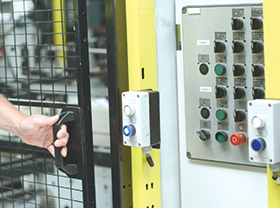
Functional safety is the backbone of every automated industrial operation, especially in high-risk, high-output environments like those found across South Africa’s manufacturing and processing sectors. Emergency stops, safety interlocks and light curtains play an important role in protecting people, preventing downtime and ensuring compliance with local and international regulations. Yet, for many South African facilities, the process of verifying these systems remains manual, labour-intensive and incredibly time-consuming. Until now.
The reality of traditional safety testing
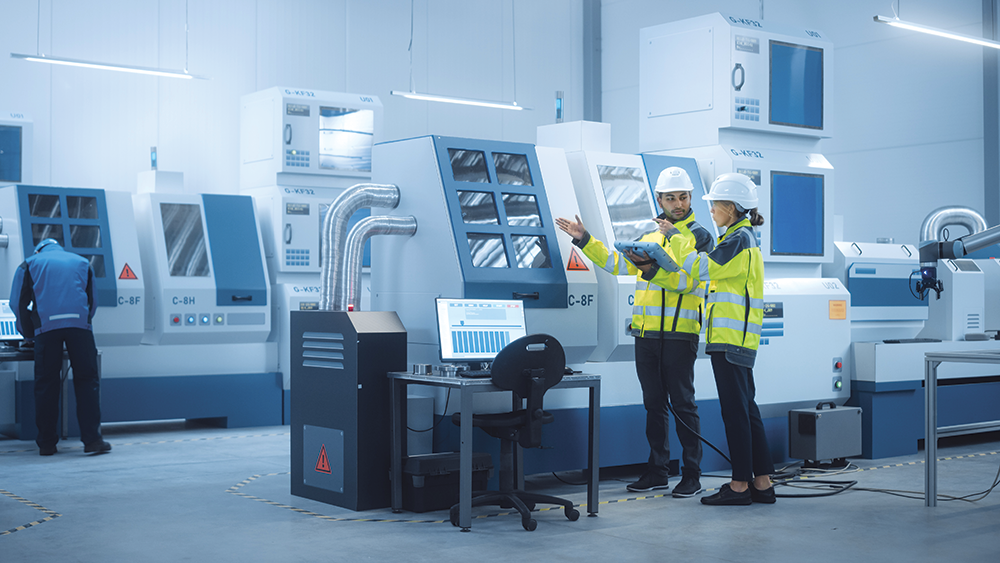
Across local plants, whether in FMCG, food processing, mining or automotive, functional safety checks still often rely on teams of engineers manually triggering devices along a line. One engineer monitors the HMI or control panel, while another walks the floor testing devices and relaying instructions. These verbal back-and-forths take an incredible amount of time, are prone to error and require skilled resources. Documentation is often incomplete or inconsistent, especially when time is tight or teams are short-staffed. For operations looking to minimise downtime and improve efficiency, this outdated approach presents a growing challenge.
A smarter option with Sysmac
OMRON’s NX Safety platform offers a modern solution, Online Safety Functional Test Verification, which is a feature built into the Sysmac Studio engineering environment. This intuitive tool allows safety verification to be carried out digitally, with step-by-step guidance and full traceability, all from a single workstation.
Once connected to the NX Safety Controller via Ethernet or Wi-Fi, the system walks the user through each safety test, whether it’s checking an e-stop, light curtain or a door interlock. As each component is tested, the software records the real-time response of the safety program, logging it automatically with a timestamp.
There are no more clipboards or guesswork, and in many cases, no second engineer is needed.
Reliable reporting for safety compliance
For South African companies navigating strict health and safety requirements, audit readiness is non-negotiable. This tool generates a comprehensive, digital test report after each verification cycle, complete with a safety signature, ensuring traceability for inspections or certification processes. This is particularly useful in regulated sectors like pharmaceuticals, food and beverage, and petrochemicals. Should a test step fail, it can be flagged, annotated and retested. The tool supports both first-time commissioning and ongoing routine maintenance, helping teams ensure ongoing compliance with standards like ISO 13849-1 (PLe) and IEC 61508 (SIL3).
More efficiency, less downtime
Perhaps most importantly for South African manufacturers working with tight teams and limited resources, the Online Safety Functional Test allows a single operator to manage the process end-to-end. This reduces the need for multiple skilled personnel, shortens testing cycles and ensures consistent procedures, regardless of plant size or shift changes.
Future-ready functional safety
OMRON’s NX Safety platform offers a modular and scalable approach to safety control that meets the needs of both small manufacturers and large, complex installations. With digital safety verification built in, it brings engineering teams a powerful tool to reduce risks, save time and keep operations running safely and smoothly.
OMRON is a global leader in the field of automation based on its core technology of ‘Sensing & Control + Think’. The company’s business fields cover a broad spectrum, ranging from industrial automation and electronic components to social infrastructure systems, healthcare and environmental solutions. OMRON supports manufacturing innovation by providing advanced automation technologies and products, as well as through extensive customer support, to help create a better society.
As a leader in industrial automation, OMRON has extensive lines of control components and equipment, ranging from vision sensors and other input devices to various controllers and output devices such as servomotors, as well as a range of safety devices and industrial robots. By combining these devices via software, OMRON has developed a variety of unique and highly effective automation solutions for manufacturers worldwide. Based on its reservoir of advanced technologies and comprehensive range of devices, OMRON set forth a strategic concept called ‘innovative-Automation’, consisting of three innovations, ‘integrated’ (control evolution), ‘intelligent’ (development of intelligence by ICT) and ‘interactive’ (new harmonisation between people and machines). OMRON is committed to bringing innovation to manufacturing sites by materialising this concept.
Even in autonomous systems, human insight is important Schneider Electric South Africa
IT in Manufacturing
As AI, IIoT and digital twins reshape industrial operations, Schneider Electric’s Kobus Vermeulen and Bafana Msibi argue that the operator’s role is shifting from controlling equipment to interpreting intelligence, validating AI recommendations and making decisions that improve
Read more...AI-based quality inspection scales across P&G operations Siemens South Africa
IT in Manufacturing
Siemens and Procter & Gamble are expanding an AI-based visual inspection system across P&G’s manufacturing operations worldwide, inspecting products in real time at full line speed, and reducing scrap rates by 10 to 20% depending on the product.
Read more...How sustainability unlocks real business impact Rockwell Automation
IT in Manufacturing
Sustainability has moved from a compliance obligation to a strategic driver of resilience and value for manufacturers. Rockwell Automation explains how its Triple A framework and connected-data approach help producers cut energy, water and waste while improving productivity.
Read more...Mining’s AI future will depend on people as well as technology
IT in Manufacturing
South Africa’s mining industry is embracing digitalisation and AI, but AvenirHoldings chief executive officer, Tshidi Mndzebele says the real test is whether the people behind the industry are equipped to move forward with it, and outlines five things mining needs to get right.
Read more...How BIC overcame operational silos to integrate technology and people Rockwell Automation
IT in Manufacturing
Manufacturing giant BIC deployed Plex MES from Rockwell Automation at its Bizerte plant in Tunisia, replacing fragmented, partly in-house software with a single cloud-based execution system that broke operational silos and improved shop-floor visibility.
Read more...AI in industry is an early warning system, not a guarantee Schneider Electric South Africa
IT in Manufacturing
Schneider Electric’s Paul Steyn argues that AI in industrial maintenance is only as good as the infrastructure and people behind it, and explains the three layers a facility needs before predictive maintenance can deliver on its promise.
Read more...SA’s mining industry must put people at the heart of its digital future
IT in Manufacturing
South Africa’s mining industry employs around 470 000 people while its digital transition accelerates. Avenir’s chief executive officer, Tshidi Mndzebele argues that technology should enable and upskill the workforce rather than replace it, setting out five ways mining can make technology work for its people.
Read more...Quality control supports efficient tissue production Valmet South Africa
IT in Manufacturing
Valmet’s advanced quality control technology is helping tissue producers improve product consistency while reducing energy and raw material consumption. Its latest installation at KORO Paper in Vietnam combines real-time measurement, process optimisation and non-contact, nuclear-free quality control.
Read more...Patented algorithm maximises operator efficiency Rockwell Automation
IT in Manufacturing
Rockwell Automation piloted a patented anomaly detection algorithm and FactoryTalk DataMosaix at its Twinsburg electronics plant, giving operators 30 to 60 days’ advance warning of stencil failure, improving fail rates by 22% and achieving a 200% return on investment.
Read more...Cybersecurity must become part of the next era of industrial automation Adroit Technologies
IT in Manufacturing
The EU’s Cyber Resilience Act is setting a global benchmark for connected products, making cybersecurity a core engineering requirement in industrial automation. Adroit Technologies and Mitsubishi Electric explain how building security into controllers, PLCs and drives from the outset helps South African manufacturers protect production and meet international expectations.
While every effort has been made to ensure the accuracy of the information contained herein, the publisher and its agents cannot be held responsible for any errors contained, or any loss incurred as a result. Articles published do not necessarily reflect the views of the publishers. The editor reserves the right to alter or cut copy. Articles submitted are deemed to have been cleared for publication. Advertisements and company contact details are published as provided by the advertiser. Technews Publishing (Pty) Ltd cannot be held responsible for the accuracy or veracity of supplied material.










 printer friendly version