



As water tariffs rise and infrastructure continues to age, utilities across the Nordic region are under growing pressure to do more with less. While much of the stress is visible in budgets and regulatory reports, the core challenge lies beneath the surface: in long-distance networks, buried pipelines and elusive leaks. Mano Koolen, channel sales manager at Ovarro, the leak detection specialist, outlines how municipalities are responding to hidden water loss using acoustic monitoring and analysis tools that provide early indications of developing leaks.
Global Water Intelligence’s 2025 Tariff Survey shows that in Europe around 30% of water is lost before it reaches households, and traditional methods to detect these leaks often fall short. Leaks occur underground, in remote terrain, under extreme temperatures and high pressures, and traditional detection methods often miss issues that go unresolved for months.

The invisible challenge of Nordic geography
Norway alone spans over 2400 kilometres, with networks winding through mountains, valleys and sparsely populated areas. Manholes are up to 4,5 metres deep. Seasonal temperature swing from 40°C in summer to -30°C in winter, and the physical stress on older pipes is substantial. Materials like cast iron expand and contract over time, developing cracks that go undetected by conventional tools.
Operational fragmentation adds another layer of complexity. Water, wastewater and maintenance teams often use separate systems. Cybersecurity considerations and connectivity limitations also impact the adoption of new monitoring technologies.
From routine inspection to real-time insight
Many Nordic utilities are rethinking their approach. By integrating departments, strengthening data quality and using acoustic logging to track anomalies, they are moving away from reactive maintenance towards earlier, data-driven intervention. Organisations that adopt proactive methods typically reduce unplanned outages by intervening earlier, with greater accuracy. A McKinsey finding is that AI-powered predictive maintenance can cut service disruptions by up to 50%.
Acoustic logging in particular has been transformative. Rather than waiting for surface signs of failure, utilities now deploy fixed or portable devices to ‘listen’ for pressurised leaks. By identifying leaks at an early stage, the systems provide a predictive indication of where losses are likely to intensify if left untreated.
Hamar: a real-world return on investment
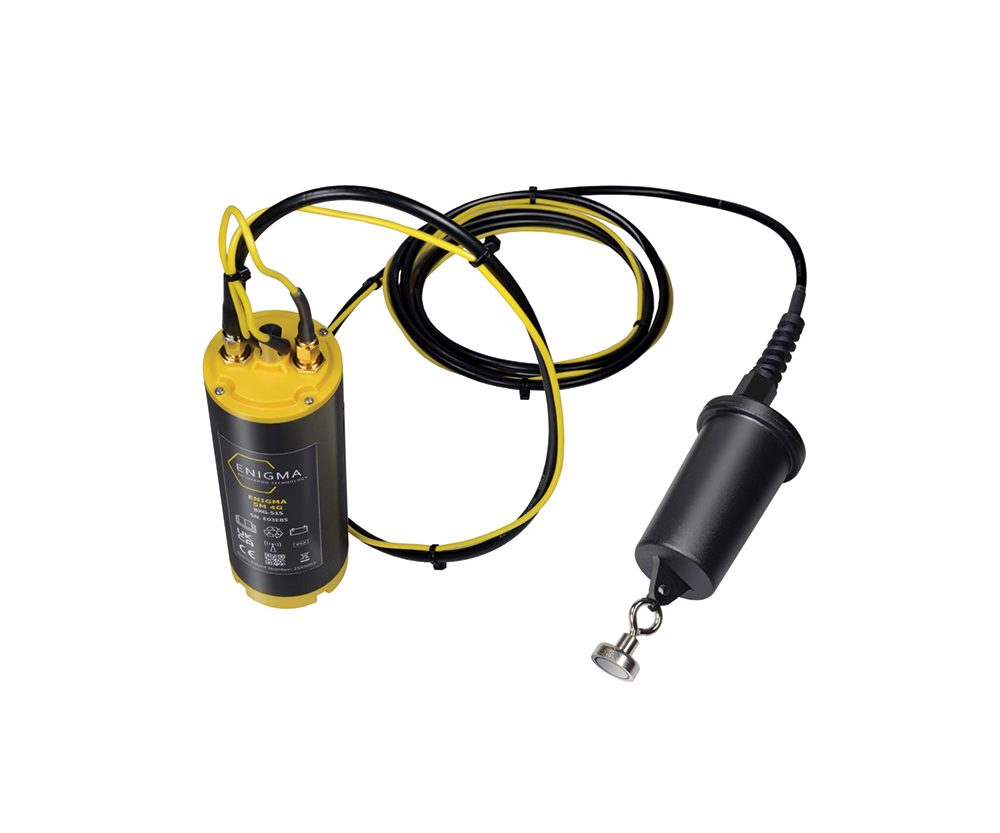
A recent project in Hamar, Norway, demonstrates the value of this shift. The municipality installed Enigma5 fixed acoustic loggers from Ovarro to monitor a challenging section of pipeline. Within days, the system flagged an anomaly. Engineers correlated the data between two loggers and confirmed a leak releasing 600 cubic metres of water daily. Financially, the loss translated to €2718 per day, or more than €990 000 per year.
Without the system in place, the leak could have gone undetected for months. The area was hard to access and the manhole particularly deep, yet the acoustic signature was clear, enabling rapid confirmation and repair. In this case, the return on investment was measured not in years, but in weeks.
A similar success was seen in Oslo, where 75 Enigma5 hydrophones helped reduce night-time water consumption from 80 litres per second to just 22. Around half of this saving was directly linked to the leak detection technology, delivering an estimated annual cost reduction of €120 000. Once again, the return on investment was not measured in years, but in immediate, measurable gains.
Towards continuous oversight
Portable loggers, such as EnigmaREACH, complement fixed systems by allowing utilities to survey wider areas using the lift-and-shift method. Deployed across a stretch of pipeline, they record overnight and are retrieved for analysis the next day. By combining sweep-based and fixed monitoring, municipalities gain both flexibility and consistency, converting periodic inspection into continuous oversight.
The result is greater control over networks that were once monitored intermittently. Utilities can detect new leaks early and ensure repaired sections remain stable. With growing public expectations and rising costs, this ability to act quickly and accurately is critical.
Empowering sustainable progress
As Nordic utilities respond to financial pressures and sustainability goals, the focus is shifting from repair to detection. The case in Hamar is one example, but similar stories are emerging across the region, from remote farmland to dense urban networks. The technology is proven, the need is pressing and the benefits are immediate.
Ovarro’s portfolio of acoustic monitoring and telemetry solutions, including Enigma5, EnigmaREACH and advanced RTUs, is helping utilities close the gap between visibility and action. By revealing the unseen, Nordic municipalities are laying the foundation for long-term sustainability, one leak at a time.
For more information contact Ovarro,






© Technews Publishing (Pty) Ltd | All Rights Reserved
 printer friendly version