PDS implementation on mines
October 2025
Sensors & Transducers
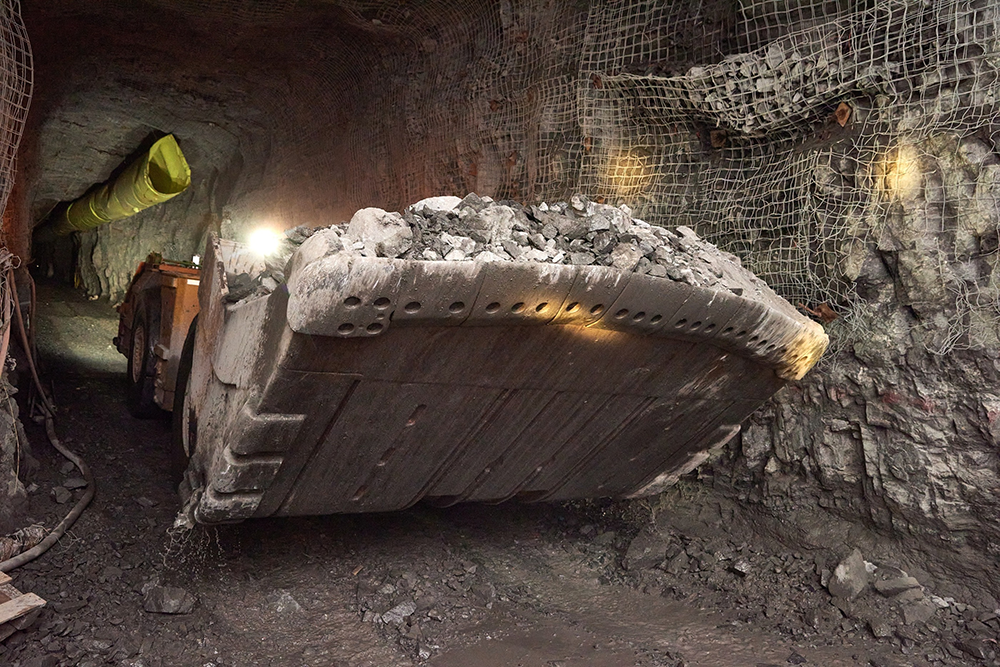
Level 9 vehicle intervention for collision avoidance has been mandatory on South African mines since 2022, yet the effective roll-out of proximity detection systems (PDS) remains slower than expected. “This is not due to the technical limitations of integration, but to operational readiness on site,” says Booyco Electronics CEO, Anton Lourens.
The Level 9 requirements mandate engineering controls on trackless mining machines (TMMs) to automatically slow down or stop vehicles, preventing both machine-to-pedestrian and machine-to-machine collisions. While PDS technology has advanced considerably to meet these requirements, Lourens stresses that a real challenge lies in how mines prepare to integrate it.
“Many operations are still not ready to operationalise PDS within their daily activities, safety systems or workflows,” he explains. “Successful adoption demands coordinated involvement from all stakeholders, including the mine’s own management, operators and departments, regulators, technology suppliers and TMM OEMs.”
Detailed risk assessments remain a key requirement for mines to identify and mitigate significant hazards around TMMs. Lourens notes that PDS is a valuable tool in this process of mitigation that can provide valuable information, but its implementation must be systematic and aligned to the broader risk framework.
The choice of PDS technology depends on the specific environment and is based on identified risks, whether underground, surface, hard rock or coal. It must be introduced without creating further unintended risks to other operational systems, particularly production.
He explains that a critical starting point includes the mine’s traffic management plan. Reducing vehicle-pedestrian interaction lowers risk and minimises production disruption. Continuous analysis of incident hotspots can guide traffic flow adjustments and sometimes operational plans may need to be revised. Once traffic patterns are optimised, PDS deployments can be aligned to complement these flows. Misalignment risks frustrate operators, creating ‘PDS fatigue’ from excessive warnings which can lead to alerts being ignored.
Operational readiness, therefore, requires full leadership commitment and cross-functional collaboration. Lourens points out that while PDS suppliers often deal with engineering teams, production, finance and human resources must also be engaged. Finance teams need to weigh capital and maintenance costs against safety and efficiency benefits. HR must oversee operator training and production must understand the operational implications.
Change management, he warns, is neither quick nor easy. It requires active communication across the mining ecosystem, ensuring that everyone understands the system’s function and value. “Any new system must be accompanied by a change in behaviour or nothing will improve,” he says. “Unlike when introducing mechanical equipment, PDS operates invisibly through radio frequencies, so early engagement, clear communication and thorough training are essential.”
From induction and operator instruction to ongoing best practice reinforcement, mines must take a structured inclusive approach to PDS adoption if they are to achieve the full safety benefits envisaged by the Level 9 regulations.
For more information contact Booyco Electronics, +27 11 823 6842, info@booyco-electronics.co.za, www.booyco-electronics.co.za
Further reading:
Market opportunity for sensors in humanoid robots
Sensors & Transducers
A new IDTechEx report forecasts the market for sensors in humanoid robots will exceed $6,59 billion by 2037, driven by perception sensors, force/torque sensors, encoders and inertial measurement units across a growing range of commercial robot platforms.
Read more...
The wireless route to safer, more efficient mining operations
Emerson Automation Solutions
Editor's Choice Sensors & Transducers
Modern wireless level measurement technologies are helping mining operations improve process control, increase safety and reduce installation costs. Emerson’s Rosemount 3408 wireless non-contacting radar level transmitter uses 80 GHz frequency-modulated continuous wave radar with HART communication to reach remote assets where cabling is impractical.
Read more...
Telco sensors for harsh environments
Sensors & Transducers
Telco sensors are designed to operate where moisture, particulate contamination and surface fouling would disable conventional sensors, with a range including an adjustable five-metre infrared proximity sensor for harsh industrial environments.
Read more...
The data-driven path to sustainable manufacturing
ifm - South Africa
Editor's Choice Sensors & Transducers
Smart automation is closing the gap between operational efficiency and environmental responsibility, and the data to do it is already inside the plant. With ifm’s sensing and digitalisation technologies, manufacturers can turn machine intelligence into measurable sustainability gains.
Read more...
Expanding visibility in mining operations
Emerson Automation Solutions
Editor's Choice Sensors & Transducers
Advances in wireless communications, condition monitoring and sensing technologies are helping mining operators extend measurement into previously under-monitored areas, improving equipment reliability, process performance and water stewardship.
Read more...
Fiber-optic amplifiers for precise object detection
ifm - South Africa
Sensors & Transducers
The OCF fibre-optic amplifier detects even the smallest or most transparent objects in confined spaces, making proven fibre-optic technology easier and more user-friendly than before.
Read more...
The next era of measurement and instrumentation
Sensors & Transducers
Smart sensors and non-contact radar are reshaping industrial measurement, feeding connected platforms that predict failures before they happen.
Read more...
Distance sensor for confined spaces
ifm - South Africa
Sensors & Transducers
The O6D100 from ifm has been designed as a powerful all-rounder for typical applications in object detection, distance measurement and positioning.
Read more...
Optimise sludge treatment and reduce operational costs
Endress+Hauser South Africa
Sensors & Transducers
Endress+Hauser’s inline measuring devices, the Proline Teqwave MW 300 and the Proline Teqwave MW 500, determine the total solids content of wastewater directly through microwave transmission.
Read more...
Inclination sensors for motion control
ifm - South Africa
Sensors & Transducers Motion Control & Drives
The JBC dynamic inclination sensor from ifm offers accurate angle measurement in the most demanding conditions, filtering out motion disturbances such as vibrations, shocks and vehicle dynamics to deliver reliable inclination values via IO-Link or programmable switch outputs.
Read more...










 printer friendly version