



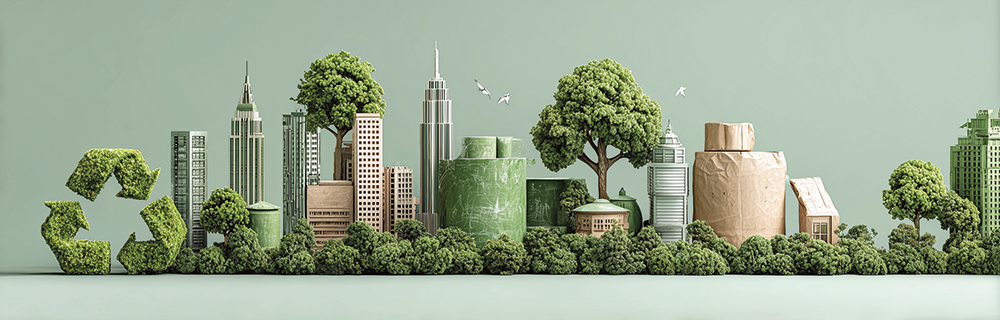
With the planet’s resources stretched to the brink and no signs of improvement, it is time we look beyond sustainability and explore regenerative thinking and design. Let me say this straight. With the global population hitting 8 billion people, it is not enough to just be sustainable anymore. The rapid rise in the population means a greater demand for goods and services, which in turn places additional burdens on natural resources, not to mention the impact on the climate through increased waste and pollution. To meet these challenges, what we need is to pursue regeneration on top of sustainability.
What do I mean by this? Where sustainability focuses on improving efficiencies and reducing waste in existing systems, regeneration aims to restore, rethink and redesign systems. Instead of competing with or exploiting nature it aims to work alongside nature, creating a symbiosis that balances our needs with nature’s capability to provide. You see examples of this every day in how natural ecosystems operate, with flora and fauna working in harmony, leading to regenerative cycles that can exist for millennia. What is stopping humanity from doing the same?
I see new regulations, climate phenomena and a very real lack of resources pushing everyone from governments to businesses to individuals to rethink old ways of production, consumption and sustainability. The UN, for instance, has already slammed organisations for paying mere lip service to sustainability and has released guidelines to help create real change.
Regenerative thinking can help fill this gap by helping replenish marine and forest ecosystems, creating circular economies that see near-zero waste, and bringing in brand new models of working and living to sustain billions of people. Some examples come to mind. One lies in the blue economy, with the World Economic Forum working with the Indonesian government to boost ocean conservation efforts, while at the same time, using mechanisms such as blue carbon to raise investments to restore marine environments and communities. Meanwhile, shoe and apparel maker, VF Corporation − owner of the North Face, Timberland and other iconic brands − is working on creating a regenerative leather supply chain by investing in verifiable regenerative ranches. Here in Finland, the forestry sector is using sustainable forest management practices to produce wood-based products while ensuring forests grow per natural cycles.
Getting regenerative thinking into the mainstream
The result of all these initiatives is net positive outcomes for all. There is so much promise here. Regeneration, alongside decarbonisation and resiliency, were key themes at Davos 2023, making it a good bet that it will be a big focus for various organisations in the years ahead.
But for regenerative thinking to truly take off, I see the need for creating greater awareness about these systems, data to show the impact it can have and standards by which we can govern and maintain accountability. How do we go about achieving these three goals − through accurate and verifiable measurements. Everything is based on measurement. When we talk about a carbon footprint, it is often not a measured quantity but a calculated one. It should be measured in such a way that if an organisation decides to adopt regenerative practices, we should have measured data on exactly how much emissions have reduced by, along with accurate reporting of its carbon footprint. By incorporating data and measurement so that it becomes part of the regenerative and sustainability journey, you will automatically create the transparency, trust and support needed to help regeneration enter the mainstream.
While verifying these measurements requires calibration, this is not to say that you simply need to calibrate more. Instead, critical elements need to be identified and verified so that measurements taken are uniform across the board. This will ensure that your measured quantity is the same as the quantity considered by regulators and other stakeholders. Here is where we at Beamex can provide help, especially in long chain processes where every measurement error can add up, leading to wrong conclusions. At a time when much of the world is polarised about different issues, such mistakes can only lead to greater uncertainty.
Personally, I am hoping that regeneration, or indeed any other effective system that can help us live in harmony with the planet, takes off and soon. This is an ongoing journey, and we will certainly do our part in ensuring you are travelling equipped with the right information.
LinkedIn: www.linkedin.com/feed/update/
urn:li:activity:7049246028050419712/
For more information contact Beamex Group,






© Technews Publishing (Pty) Ltd | All Rights Reserved
 printer friendly version