



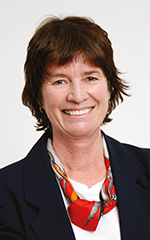
In this issue of SA Instrumentation & Control we say farewell to our longstanding contributing editor, Michael Brown, who is retiring soon. His outstanding contribution over the years in the field of plant optimisation has added immense value to or magazine. Luckily for us, Michael is making his Loop Signature and Case History articles available for quite a while. He has also indicated that his courses are offered in PDF format for download, and he is still the representative for Protuner software. We wish him a happy, healthy and fulfilling ‘proper’ retirement.
On a rather different note, I’ve been hearing a lot about the concept of ‘the singularity’ and decided to find out more. The broad idea is that the rate of technological progress is accelerating exponentially, and in a few decades superintelligent machines will cause unpredictable, irreversible changes beyond human understanding or our ability to adapt. The expected results vary depending on your viewpoint. Pessimists see the extermination of the human species by AI beings, while optimists prefer to imagine an age of material abundance and leisure, “with genetically modified humans uploading their minds into a silicon utopia”. This ties in with Moore’s Law, which says that the number of components engineers can cram onto a chip doubles every two years. We’re already in a world where staggering amounts of computing power can be had for almost nothing.
The futurist, Ray Kurzweil defines the singularity as the point where AI surpasses all human intelligence, and will think, create and make better judgments than us. In his 2005 book ‘The Singularity Is Near’, he predicts that it will happen around 2045. He has just updated it and called it ‘The Singularity Is Nearer’, but he’s still sticking to 2045 as the year when everything will happen. This has far-reaching implications, both positive and negative. He rather romantically says: “Some people find this frightening, but singularity is going to be beautiful and will expand our consciousness in ways we can barely imagine, like a deaf person hearing the most exquisite symphony for the first time.”
This reminds me of Isaac Asimov and the Three Laws of Robotics. His wonderful sci-fi stories written in the 1950s envisioned a future where humans anticipated the rise of AI and built safeguards, unlike the uncontrollable explosion of intelligence proposed by this new singularity theory. For me, one of his most memorable quotes is: “The saddest aspect of life now is that science gathers knowledge faster than society gathers wisdom.”
All this makes me think of George Orwell’s novel, 1984, which was first published in 1949. He warned of the dire consequences of totalitarianism, mass surveillance and repressive regimentation of people through Big Brother. In 1984 there was much talk about this, but the world moved on, just as it did in 2000 with Y2K and in 2020 with COVID. On the other hand, some see parallels today to Orwell’s dystopian vision, and think they are unfolding right now.
Kurzweil also predicted that we would have conversations with simulated people, speaking to them as advisors and friends with emotion and empathy, and fulfilling an emotional need not being met in real life. There are already apps like Xiaoice, where you can have a virtual partner and do everything together, from discussing the news to sharing deep thoughts and giving life advice. Followers say it’s much cheaper to date an AI boyfriend (or girlfriend) than a real one. I have to say I find this a bit disturbing. Even now, the lines between real and artificial interaction are blurring. As amazing as generated texts are, we still need to know that our communication is with an actual human being. Even Google agrees. In 2022 the company suspended a software engineer after he argued that AI chatbots could feel things and potentially suffer.
Twenty years ago, who could have foreseen the social media boom, the smartphone, the cloud, remote working, military drones or translators? Now we have AI assistants, image generators and GPT-4 to tell us pretty well anything. On the horizon are VR wearables, robotic caregivers and even more advanced medical treatments. The technologies that are succeeding meet real human needs − like convenience, affordability and emotional fulfilment.
Kurzweil believes that through brain-computer interfaces and genetic engineering, people will enhance their intelligence, physical ability and lifespan. It’s an exciting but terrifying thought. It could unlock a golden era of progress, or unleash dangers beyond our control with catastrophic consequences. It all depends on how wisely we navigate the path ahead. I think that so far mankind has somehow done that. Who knows what’s next?
| Tel: | +27 11 543 5800 |
| Email: | [email protected] |
| www: | www.technews.co.za |
| Articles: | More information and articles about Technews Publishing |






© Technews Publishing (Pty) Ltd | All Rights Reserved
 printer friendly version