



Temperature monitoring is a critical requirement in various industrial settings, from research labs and clinical environments to retail outlets, and even shipping tankers. Gary Bradshaw, director at alarm annunciator specialist, Omniflex explores the importance of alarm annunciators in temperature monitoring applications, drawing on examples from different industrial settings.
The use of IoT technology in the era of Industry 4.0 is widespread, so the benefits of remote monitoring of key assets are more compelling than ever, as this provides businesses with the most convenient and cost-effective way of managing system performance. For example, in applications with strict temperature requirements, monitoring assets over long periods of time provides rewards in the form of lower operating costs, faster response times, and better service levels.

Maintaining assets in laboratories
In hospitals and clinical environments globally, cryopreservation units are used to store everything from human tissue samples to blood and bone marrow. In these applications, even small fluctuations in the freezer’s operating temperature can harm the viability of precious samples.
This is why it is an increasingly important requirement for laboratory managers to validate the cold chain of all materials with specific temperature storing requirements. Famously, the Pfizer coronavirus vaccine had very strict temperature requirements for long-term storage and transportation.
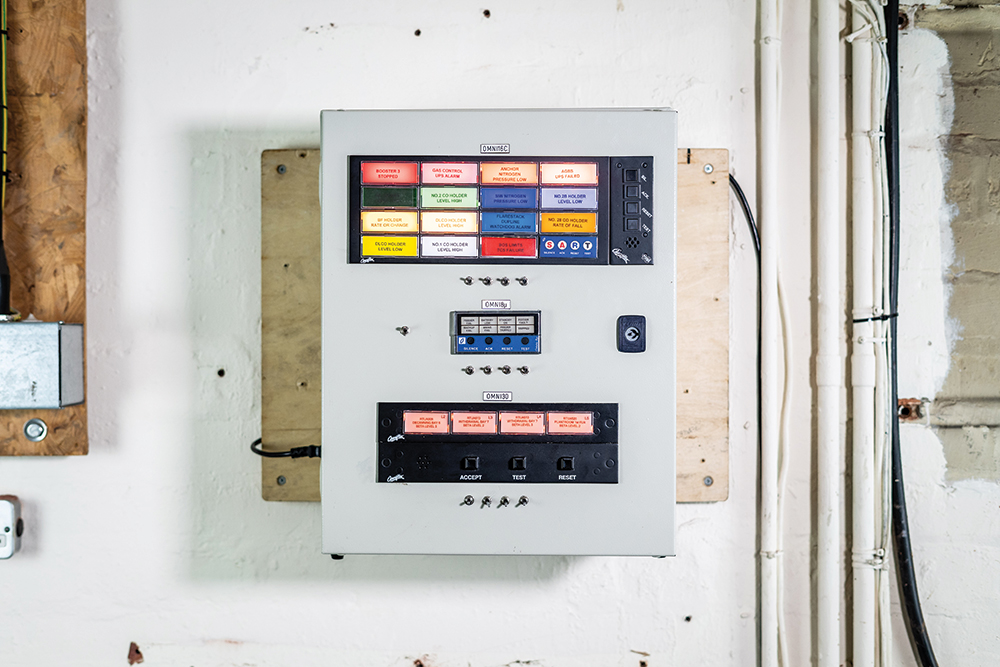
Alarm annunciators with built-in remote monitoring provide laboratory managers with the most cost-effective means of validating freezer system performance. They do this by being hardwired directly into the monitored processes, in this case the cryofreezers in the laboratories, so there is no risk of network failures that impede the alarm’s performance. In the event of the temperature deviating outside of normal limits, the relevant panel on the annunciator lights up, and an alarm sounds, sending a clear signal to all nearby personnel that the freezer is in an abnormal state.
Built-in remote monitoring technology also enables text and email alerts to be sent to relevant personnel, such as laboratory managers and maintenance technicians, so they can act quickly to protect research samples. This prevents the previously common occurrence of systems failing overnight, only to be discovered the following working day when the damage is already done.
Omniflex has worked with laboratories, such as at Oxford University and South Africa’s Medical Research Council, to install this technology and help laboratory managers overcome challenges with cryopreservation, and have long-term confidence in the cold chain for their stored materials. However, it is important to remember that the benefits of this technology apply further than industrial environments, and also help in day-to-day settings like retail outlets.
Freezer monitoring in retail settings
In retail environments, specifically grocery stores, it is common to see aisles and aisles of freezers storing food to be purchased by the public. Obviously, with a lot of freezer-stored food, like meat and dairy, there are health risks if people were to eat food that had been incorrectly stored and gone off as a result.
In these settings, this can be avoided, and food products protected by connecting freezers in the aisles to alarm annunciators in the store’s central control room or general office. This means that workers can be alerted in the event of a system failure, and act to protect goods by transferring them to alternative freezers while maintenance is performed on the faulty unit.
However, one thing to consider here is the freezer’s scheduled defrost cycles. This can be mitigated for by setting up the connected alarm annunciator to include a time delay, so it does not immediately enter an alarm state every time the contact opens and closes, and only does so once it has been that way for a fixed amount of time. This means that workers can be confident that all alarms triggered are real, and each requires them to act.
By working with a reliable alarm annunciator specialist with experience in specifying solutions for different applications, retail managers can ensure that they get the right system for the job, and that the alarm is properly set up for any given application.
| Tel: | +27 31 207 7466 |
| Email: | sales@omniflex.com |
| www: | www.omniflex.com |
| Articles: | More information and articles about Omniflex Remote Monitoring Specialists |






© Technews Publishing (Pty) Ltd | All Rights Reserved
 printer friendly version