



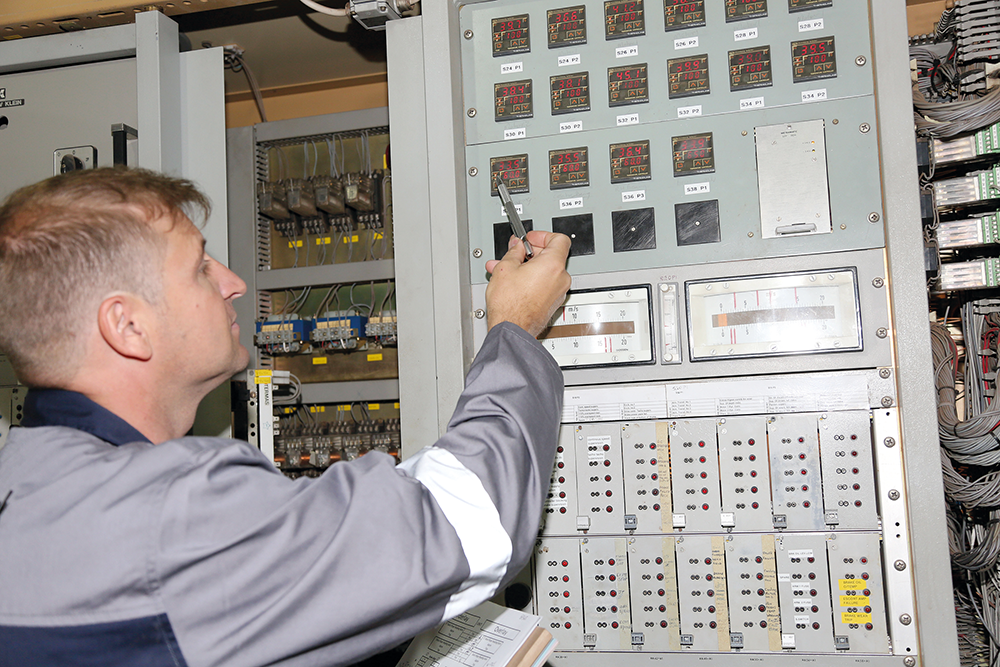
 Testing for Level 1 audit, conducted by WearCheck’s advanced field services technician, Joe Kies.
WearCheck’s advanced field services (AFS) division offers a wide range of specialist monitoring techniques, which include rope testing, technical compliance (TC) and non-destructive testing. Here, some of the different TC techniques are discussed.
According to Johan Stols, WearCheck’s TC manager, the ultimate goal of the TC division is to ensure that all the components that his team monitors comply with stringent, pre-determined safety standards. The TC team plays a supporting role to customer operations through the reduction of risk, using specialised and multidisciplinary services and resources, with team members who are on call 24/7.
The division’s customers predominantly operate in the mining sector, but other industries are realising the value of TC, too, he says. The team’s mining customers are generally the deep-level mines – coal, gold, platinum, etc. – where vertical shafts (people movement), incline shafts (goods movement), ropes and many other components are tested.
The TC tests generally include Level 1 winder and main fan compressor inspections, compliance level electrical inspections, headgear elevator electrical inspections, lock bell inspections, chairlift electrical inspections, secondary injection testing and conveyor belt compliances.
Regular testing of these components ensures that they are always in a safe operating condition. Inspections are conducted using specialised testing equipment, highly skilled and experienced inspectors, and compliance to rigorous safety standards.
In most countries, TC standards are legislated in many cases, but are also guided by industry-recognised best-practice values. Stols explains: “We add value for our clients by providing quality services, and identifying and mitigating risks associated with safety and production-critical equipment.
‘WearCheck’s TC team comprises six winder inspectors who have around 140 years’ combined experience. It is their responsibility to check that every component in a given machine is working exactly as it is supposed to. For example, on a lighting circuit, all lights must be working perfectly; or each safety circuit trips exactly when it is supposed to trip. Any errors we discover are reported to the engineer in charge of that particular component. Repairs are effected by the engineer’s maintenance team, and then the TC team retests the faulty component.
He goes on to explain that in dynamic testing, which is applied to licensed winders, the law states that physical testing must be conducted within every 200 days in order to comply with safety standards. There are two levels of testing: Level 1 is where general electrical and mechanical audits are conducted; Level 2 involves designer audits on OEMs. In Level 1 testing, even without a specific law that stipulates testing frequency for winders, industry best-practice dictates that they should be tested at least four times a year.
During a typical TC audit, which is normally done during a weekly examination in which around 100 items are tested, the safety circuit is tested for correct operation. The different circuits on each unit must be tested to ensure correct operations. A report is compiled with all findings, and includes the previous three audit results so that a trend can be established. Recent repairs done on the machine are highlighted. Tracking the compliance status of each component enables the engineer and the maintenance team to keep the component in peak operating condition and avoid nasty accidents or costly downtime.
“What is important to note, for example, is that each winder has its own unique operating and protection system, which must be adhered to when it is undergoing testing. We make sure that we are acquainted with each component and its maintenance and compliance history. Our TC team is standing by to assist in any way possible to ensure that all moving machinery is audited according to best practice, and that all required safety standards are met. Due to the production-critical nature of our support work, we are on call 24/7/365,” Stols concludes.






© Technews Publishing (Pty) Ltd | All Rights Reserved
 printer friendly version