Better transformer design improves safety
October 2019
Electrical Power & Protection
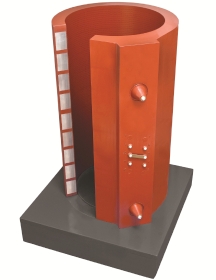
As electricity utilities and users worldwide look to become more safety conscious and efficient in their use of electrical energy, it is important to leverage the improvements that have been made in the design of transformers.
According to Trafo Power Solutions managing director, David Claassen, there have been considerable strides in technology, surpassing both the efficiency and the reliability of the traditional oil-filled transformers that are predominantly used in power grid systems.
These high efficiency solutions include open-wound transformers (OWTs), vacuum-pressured impregnated transformers (VPIs) and cast resin transformers (CRTs). Traditional oil-filled transformers use paper saturated in oil wrapped around the winding material as an insulation medium. If not maintained correctly, insulation degradation will occur, with the oil posing both a safety and environmental risk.
“OWTs are constructed by dipping preheated windings into a high temperature varnish bath and then baking them,” says Claassen. “This replaces the need for oil and paper, so only a small amount of material is flammable.”
In VPI construction, layers of polyester resin are applied to the windings, which are subjected to interchanging cycles of pressure and vacuum that ensures deeper penetration and reduces the chances of air voids.
“With CRTs, windings are placed in a mould which is filled under vacuum with resin epoxy,” says Claasen. “Fibreglass mesh is used to strengthen the windings, which are cured in a heat-controlled oven. This process also prevents air voids, and the resin in CRTs is non-flammable.”
These designs have also made advances in reduced electrical losses, thereby improving efficiency. The use of OWTs, VPIs and CRTs offer considerable savings in energy costs over their life-spans, which for CRTs averages about 20 years. Despite the slightly higher capital cost (around 20%), these technologies can repay the price differential in just four years.
Claassen concludes that low loss cast resin transformers are being used in many parts of the world including Europe and North America because, although there is an initial premium, the payback period is between two and four years. These are now available for the African market from Trafo Power Solutions.
Further reading:
Turning plastic waste into clean hydrogen
Electrical Power & Protection
Researchers have developed a solar-powered process that converts plastic waste into hydrogen and useful industrial chemicals while using spent acid from vehicle batteries. The approach could help create a circular system for dealing with several challenging waste streams at the same time.
Read more...
World’s first to deploy Volvo A30 Electric in a hydropower project
Electrical Power & Protection
Volvo CE delivers the world’s first A30 Electric articulated haulers to a Norwegian hydropower project, marking a major step in the electrification of heavy construction equipment.
Read more...
Geothermal could be the next industrial energy source
Electrical Power & Protection
New developments in geothermal technology are set to change how heat trapped beneath the earth’s surface can contribute to the clean-energy transition.
Read more...
SA port could generate wave energy
Electrical Power & Protection
A feasibility study has identified the potential for an 8,3 MW wave energy power station at the Port of Ngqura in the Eastern Cape, using the port’s existing breakwater infrastructure.
Read more...
Solid-state batteries are reshaping energy storage
Electrical Power & Protection
The solid-state battery industry is transforming, driven by advanced technologies and rising demand across applications.
Read more...
South Africa’s battery manufacturing potential
Editor's Choice Electrical Power & Protection
A feasibility study commissioned by the Localisation Support Fund concludes that South Africa has the technical and commercial foundations to develop a competitive lithium iron phosphate battery manufacturing sector, anchored by growing regional demand and favourable industrial conditions.
Read more...
Compressorless hydrogen turbine generates electricity using detonation waves
Electrical Power & Protection
Researchers at the Karlsruhe Institute of Technology (KIT) have demonstrated a hydrogen gas turbine that generates electricity without a mechanical compressor.
Read more...
A clean mobility future
Electrical Power & Protection
Africa’s leading electric mobility company has published its inaugural Sustainability Report on its path to scale clean transport infrastructure and affordable mobility solutions in Africa.
Read more...
How solar system integrators and installers grow the South African market
WEG Africa
Electrical Power & Protection
WEG Africa explains how a maturing solar market is raising the bar for system integrators and installers, and what OEM support they need to stay competitive.
Read more...
Overcoming the bottling industry’s fragmented visibility
Schneider Electric South Africa
IT in Manufacturing Electrical Power & Protection
Beverage bottling facilities are among manufacturing’s most energy-intensive environments, yet many still operate without granular insight into where that energy goes. Rezolia Muller-Potluri of Schneider Electric explains how tiered metering architecture and advanced
Read more...










 printer friendly version