



Namibia’s power utility, NamPower, has officially commissioned the Sekelduin 132/66/33 kV substation near Swakopmund, marking Africa’s first fully digital substation. The facility strengthens grid reliability, unlocks future load growth in the Erongo region, and sets a new benchmark for digital energy infrastructure on the continent. ACTOM served as the main supplier, EPC contractor and systems integrator, showcasing African engineering expertise and digital innovation at its finest.
A continental first
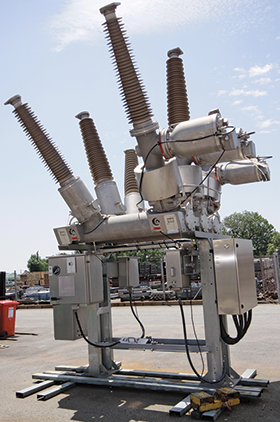
Built at a cost of N$394 million ($22,6 million), Sekelduin is Africa’s first fully digital substation designed and delivered by African teams for African energy needs. The facility uses process bus and station bus applications aligned with IEC 61850 standards, fibre-optic communication and hybrid AIS/GIS switchgear, enabling real-time monitoring, remote control and predictive maintenance.
“This is a continental first: a fully digital substation delivered by African expertise for Africa,” said Casbah Zwane, CEO of ACTOM high voltage equipment division. “Operators can now monitor live data and control switching remotely, reducing physical intervention and enhancing safety,” he added.
The digital infrastructure is also ready for AI and machine learning, allowing NamPower to plan for future energy demands, integrate digital transformation initiatives and maintain operational excellence. “Maintenance is now preventive rather than reactive, saving time, reducing costs and improving reliability,” said Phuluso Mnisi, project manager at ACTOM high voltage equipment.
Sekelduin also represents the adoption of new international engineering standards, bringing advanced European practices to Africa and successfully applying them in a challenging coastal and desert environment.
Strengthening the grid and driving innovation
The new substation provides a critical feed to Namibia’s coastal network, improving grid reliability and supporting future load growth along the Erongo corridor. Its compact indoor AIS/GIS and metal-enclosed GIS designs optimise space while protecting equipment from harsh coastal and desert conditions.
“The substation is built to adapt to future needs such as additional power and new feeders, keeping Namibia at the forefront of digital energy innovation,” Zwane said.
ACTOM coordinated multiple divisions to ensure safe energising, seamless integration of all systems, and strict adherence to timelines and budget. This collaboration was essential to delivering a fully operational digital substation, the first of its kind. “Bringing multiple ACTOM divisions together under one roof allowed us to manage complex challenges efficiently and deliver a fully integrated substation,” Mnisi added.
The project demonstrates ACTOM’s one-stop-shop approach, which reduces risk for customers during integration and provides long-term support through after-sales service and maintenance. “For our customers, working with ACTOM means a complete solution, from design and integration to ongoing support,” Zwane explained.
A blueprint for Africa’s energy future
Sekelduin sets a benchmark for cyber-secure, scalable, AI-ready digital substations across Africa. The project also provides valuable lessons for future developments, including the benefits of adopting international engineering standards, integrating multi-division expertise, leveraging digital systems for predictive maintenance, and designing for extreme environmental conditions.
“NamPower is setting the standard, and other utilities across the continent will follow,” Zwane said. “ACTOM’s collaborative, one-stop-shop approach demonstrates how to manage complex projects while reducing risk for the customer.”
With Sekelduin now operational, Namibia is strengthening its grid, futureproofing the Erongo region, and demonstrating how African expertise and technology can drive digital transformation, energy reliability and continental innovation.
The substation is a model for the future of power infrastructure in Africa, a continental first achieved with African talent, vision and collaboration. “This project proves that African engineering teams can deliver world-class, future-ready digital infrastructure,” Mnisi concluded.
For more information contact ACTOM,






© Technews Publishing (Pty) Ltd | All Rights Reserved
 printer friendly version