



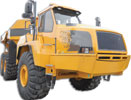
Safety is a serious issue in mines globally, but especially in South Africa with its historically high levels of accidents and fatalities. While the country’s safety record has improved dramatically, miners and their unions still demand that more should be done.
“In today’s competitive environment, the ultimate goal of mines is to improve their safety standards while keeping costs in check in order to remain competitive,” says Lourens du Plessis, MD of Modular Mining South Africa. “Of course the two issues are dependent and no mine will cut costs at the expense of worker safety. However, when using a multi-level safety strategy, mines are able to improve their overall safety record, while simultaneously improving productivity and controlling costs.”
Modular Mining Systems is a mining software company headquartered in Tucson, Arizona. The company’s IntelliMine suite includes a variety of products designed to maximise productivity by integrating optimised haulage fleet assignments, machine guidance applications, Web-based reporting and real-time communication networks. Powerful reporting and maintenance management tools integrate seamlessly to provide critical information on key assets. The suite optimises the productivity of the entire mining cycle, saving clients money and giving them a competitive edge in productivity.
Optimising safety and returns
Improved safety through a multi-level strategy means fewer costly accidents and downtime, less time in repair for expensive equipment and more time on the job for both man and machine.
Du Plessis recommends a three-tier approach to safety, starting in the working environment itself.
“The first level of safety is in and around the cab or the miner’s immediate working environment. Using technology to monitor the environment, safety and productivity are improved.” In the cab itself, automated safety systems can monitor worker fatigue to ensure no preventable accidents happen, for example. When the worker shows signs of fatigue, an alarm sounds alerting the occupant to take extra care or to take a break.
The environment around the equipment can also be monitored, again raising the alarm if the operator goes off track or if another vehicle is in the immediate vicinity. Additionally, automated monitoring of the vehicle itself will raise an alarm should it detect that the vehicle needs a service, specific repairs or is about to break down. “This preventative maintenance ensures that vehicles are off duty for the shortest periods possible,” adds Du Plessis.
The second level of safety is the real-time provision of automated reports to a supervisor’s station. By constantly monitoring a safety feed from each vehicle in operation, supervisors can also keep tabs on safety issues such as driver fatigue, equipment failure, blasting schedules and the conditions of roads. Should any of these measurements exceed specific limits, action can be taken to alert people.
The third level of safety is found in the data gathered during normal mining activities. “Data, or the effective analysis thereof is a great safety tool,” says Du Plessis. “By analysing the data available from automated systems, mines are able to ensure that people and equipment are deployed as productively and as safely as possible by pre-empting accidents and breakdowns.
Optimisation products from one source
Modular’s IntelliMine suite is an integration of several purpose-built products that address aspects of mine safety, monitoring, optimisation, analysis and asset health in one flexible package. Solutions in the product range include:
* DisPatch: mine management system software.
* MineCare: mine equipment maintenance application software.
* ProVision: machine guidance systems.
* RoadMap: position and safety tracking.
* ShiftBoss: mine production tracking system.
* MasterLink: wireless communication network.
* Value added services: Modular’s expert mining and maintenance engineers can help customers uncover and address opportunities for improvement in many areas of operation. This thorough process may involve several steps, including a system audit, engineering analysis and performance analysis. Corporate benchmarking is also available to compare mining operations.
* Mining consulting: Modular Mining engineers help customers uncover and address opportunities for improvement in many areas of operations. A visit will be made to the site to gather information and interview key personnel and, after a comprehensive evaluation, prepare an analysis with concrete recommendations for improvements.
* Maintenance consulting: Modular maintenance engineers are experts at improving equipment reliability and reducing repair costs using the MineCare maintenance management system.
* Training: Modular offers a variety of training services to complement the installation and support of the IntelliMine system, including both real-time field training and structured classroom training.
* Technology adaptation: introducing new technologies into business improperly can cause years of problems and will often dictate the success or failure of a product. Modular Mining’s deployment teams ensure that designated system users are properly trained and that all systems work properly.
At the end of the day shareholders want returns, but lowering safety standards to make a buck is no longer viable, or profitable. By implementing a multi-level safety strategy, mines can drive productivity and cost controls by ensuring the safety of staff and the optimal functionality of equipment.
Modular Mining delivers the solutions designed to assist in improving productivity and reducing costs, while putting the safety of workers and site visitors first. Through the intelligent use of technology, worker safety no longer has to be at odds with business improvement.
For more information contact Modular Mining, +27 (0)11 463 5995, www.mmsi.com






© Technews Publishing (Pty) Ltd | All Rights Reserved
 printer friendly version